The Window at the White Cat
Report an issue
Tell us what's wrong and we'll take a look.
Thanks – we got it. We'll review and follow up if needed.
Politics and Poker... that was the occupation and the preoccupation of the members of the White Cat Club. Once on the inside, a man's business was his own and nobody gave a damn if he was the mayor of the town or the champion poolplayer of the first ward. It was a noisy, crowded, masculine kind of retreat, which explained the sign that hung proudly over the door: "The White Cat Never Sleeps." But murder entered the wakeful chambers of the White Cat and its victims slept the deep, long sleep of the dead.
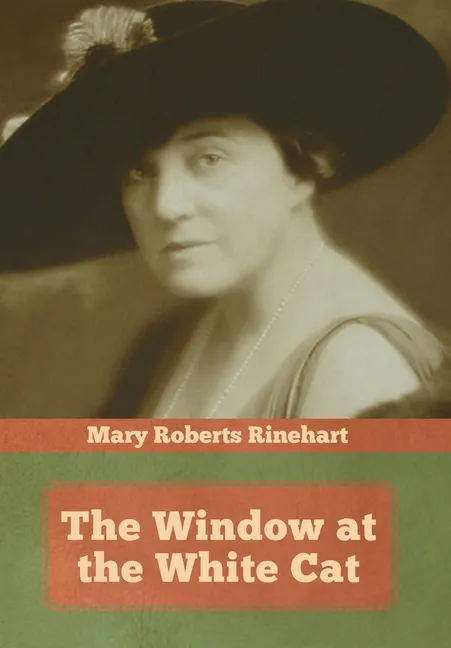
Mary Roberts Rinehart
Mary Roberts Rinehart (1876–1958) was one of the United States’s most popular early mystery authors. Born in Pittsburgh to a clerk at a sewing machine agency, Rinehart trained as a nurse and married a doctor after her graduation from nursing school. She wrote fiction in her spare time until a stock market crash sent her and her young husband into debt, forcing her to lean on her writing to pay the bills. Her first two novels, The Circular Staircase (1908) and The Man in Lower Ten (1909), established her as a bright young talent, and it wasn’t long before she was one of the nation’s most popular mystery novelists. Among her dozens of novels are The Amazing Adventures of Letitia Carberry (1911), which began a six-book series, and The Bat (originally published in 1920 as a play), which was among the inspirations for Bob Kane’s Batman. Credited with inventing the phrase “The butler did it,” Rinehart is often called an American Agatha Christie, even though she began writing much earlier than Christie, and was much more popular during her heyday.
More by Mary Roberts Rinehart










Why Readwise Books?
Readwise Books is an ebook & audiobook platform that automatically logs how much you and your friends read, making it fun and easy to read more. Learn more →