The Pivot of Civilization
Report an issue
Tell us what's wrong and we'll take a look.
Thanks – we got it. We'll review and follow up if needed.

Arguably her most important and influential book, this controversial work, first published in 1922 by pioneering birth-control advocate Margaret Sanger, attempted to broaden the still-radical idea of birth control beyond its socialist and feminist roots. Moving away from a single-minded focus on women's reproductive rights to the larger issue of the general health and economic prosperity of the whole human race, Sanger argued that birth control was pivotal to a rational approach toward dealing with the threat of overpopulation and its ruinous consequences in poverty and disease. Through this book Sanger hoped to persuade the medical establishment to assume control over contraceptive distribution, and thereby to lessen the religious, legal, and moral opposition that continued to restrict access to contraceptive information.
However important this book is to the history of women's rights, it remains a very problematic work from our more scientifically informed perspective today. In arguing for population control Sanger made frequent reference to the then fashionable "science" of eugenics. She also adopted its rhetoric, using such callous phrases as "the feeble-minded" and the "unfit" and advocating birth control as a means of limiting the breeding of "defectives, delinquents and dependents." Although she incorporated views and terminology commonly held in respectable medical and scientific circles of the day, Sanger's writings on eugenics, and this book in particular, have become fodder for her critics both on the left and the right, who seek to diminish her achievements and obscure what is ultimately a powerful feminist message: when women gain greater control over their fertility, they will improve the human race.
This unusual and historically significant book is complemented by a thoughtful and informative introduction by Peter C. Engelman, assistant editor of The Margaret Sanger Papers Project, who provides much insight by placing this work in the context of the age and Sanger's life.
Margaret Sanger
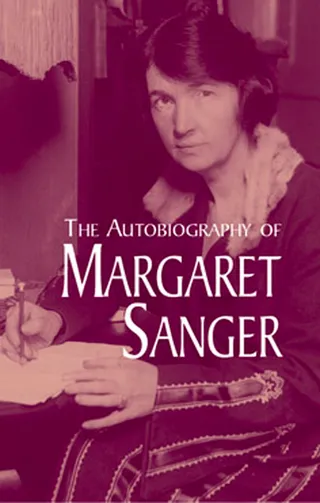
Margaret Higgins Sanger, later known as Margaret Sanger, was an influential American birth control activist, sex educator, writer, and nurse, born on September 14, 1879, in Corning, New York. She was the daughter of Michael Hennessy Higgins and Anne Purcell Higgins. Sanger's early life was shaped by the death of her mother, which fueled her dedication to improving women's health and reproductive rights. She attended Claverack College and later pursued a career as a nurse, where she became increasingly aware of the challenges women faced due to lack of access to birth control. Her advocacy for reproductive rights led her to found what would eventually become Planned Parenthood, a key organization in the movement for women's health and family planning. Sanger's work and writings, including her landmark book Woman and the New Race, promoted birth control as a means of empowering women, improving public health, and advancing social reform. She had three children: Peggy Sanger, Stuart Sanger, and Grant Sanger. Sanger passed away on September 6, 1966, in Tucson, Arizona, leaving behind a profound legacy in the fight for women's autonomy over their bodies and reproductive choices.
More by Margaret Sanger









Why Readwise Books?
Readwise Books is an ebook & audiobook platform that automatically logs how much you and your friends read, making it fun and easy to read more. Learn more →