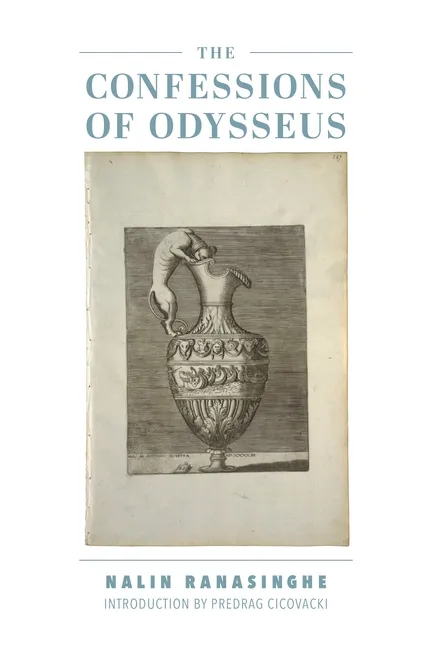
The Confessions of Odysseus
Report an issue
Tell us what's wrong and we'll take a look.
Thanks – we got it. We'll review and follow up if needed.
Predrag Cicovacki in his indispensable preface to the book, elucidates: "In Ranasinghe's view, Odysseus is both the first recognizable human being and a model of curious and concupiscent human rationality that constantly strives toward the virtues of self-knowledge and moderation. Homer leads us to believe that the cosmos leans toward virtue, although its fundamental truths may be inherently unspeakable. This is the line of thought that Ranasinghe believes was further developed by Socrates, Plato, and Jesus, while being obscured by Aristotle, Augustine, and their followers. Homer's later epic and his central insights are, according to Ranasinghe, the most fertile soil on which a humane civilization can grow and flourish."
Yet Ranasinghe ultimately says it best. "Homer must be read as the wisest Greeks did, not for fantastic tales of the Olympians but because his myths reveal eternal constants of the human state: the soul's ruling passions and the possibility of knowing and educating these false gods. Wrestled with thus the Iliad becomes a cautionary tale, not one urging literal reading or mindless mimesis. It may always be that for the few who grasp Homer, many more will obey his gods or imitate his antiheroes; but the Odyssey hints that while its poet sees this potential for misuse, he is willing to take a noble risk and hope that eros can listen to and educate thumos. This faith is implicit in his tale of Achilles and the Trojan War. It is vital today that we see how the West's end resembles its angry origins, as depicted in the Iliad. This is why Homer is said to be as fresh as the morning newspaper. His wisdom may outlive our literacy."


Why Readwise Books?
Readwise Books is an ebook & audiobook platform that automatically logs how much you and your friends read, making it fun and easy to read more. Learn more →