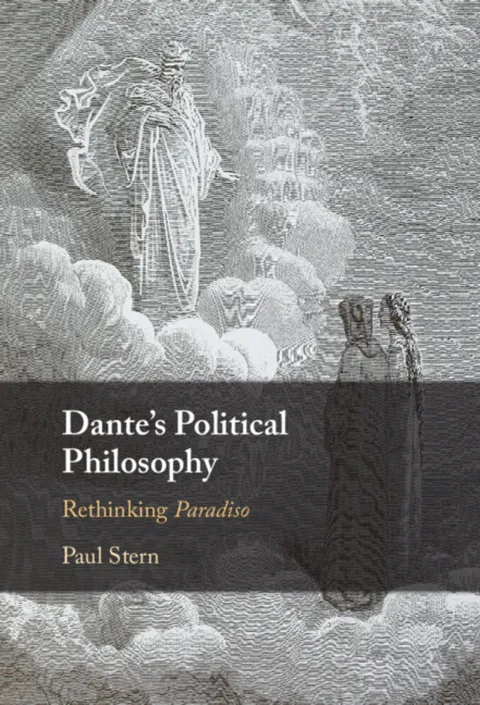
Dante's Political Philosophy
Report an issue
Tell us what's wrong and we'll take a look.
Thanks – we got it. We'll review and follow up if needed.
Dante's Divina Commedia/Divine Comedy (completed c. 1321) is considered one of the greatest works in Western literature, and its three canticles - Inferno, Purgatorio, and Paradiso - have had a powerful influence on subsequent literature and thought. Dante shares the classical idea that political philosophy aims to defend the philosophic life, and in Paradiso he does just that, defending philosophy, understood as a way of life, against its subordination to Christianity. Paul Stern shows the contribution Dante's reflection on political life makes to his theoretical defense of the philosophic life, a life whose character and goodness are conveyed by his intensely self-reflective poetry. On his account, Dante's approach can guide our judgment of any proposal for the comprehensive transformation of human existence. It enables us, in short, to think more clearly about just what we should mean by paradise.
Paul Stern
Paul Stern spent thirteen years as a trial attorney with the US Department of Justice, representing the federal government in cases stemming from the FBI's post-September 11, 2001 PENTTBOMB investigation; prisoner abuse at Abu Ghraib prison in Iraq; and the Parkland and Sutherland Springs mass shootings. Paul finished his federal government career serving as the Acting Deputy Superintendent of Yosemite National Park.
More by Paul Stern


Why Readwise Books?
Readwise Books is an ebook & audiobook platform that automatically logs how much you and your friends read, making it fun and easy to read more. Learn more →