A Chambermaid's Diary
Report an issue
Tell us what's wrong and we'll take a look.
Thanks – we got it. We'll review and follow up if needed.
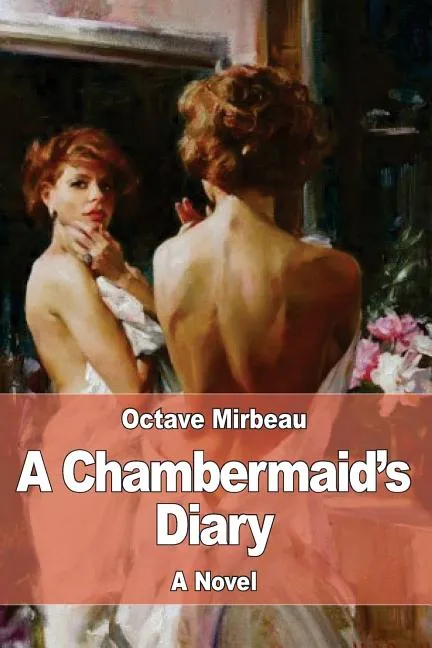
"A Chambermaid's Diary" by Octave Mirbeau offers a sharp and satirical look at French society through the eyes of a domestic servant. This classic of French literature provides incisive social commentary on class conflict and the hidden lives within wealthy households. Translated into English for a broad audience, Mirbeau's work remains a compelling example of literary fiction, exploring the psychological complexities of its subject matter with wit and unflinching honesty. This meticulously prepared edition allows readers to experience the enduring power of Mirbeau's narrative, a timeless exploration of human nature and societal hypocrisy.
This work has been selected by scholars as being culturally important, and is part of the knowledge base of civilization as we know it.
This work is in the public domain in the United States of America, and possibly other nations. Within the United States, you may freely copy and distribute this work, as no entity (individual or corporate) has a copyright on the body of the work.
Scholars believe, and we concur, that this work is important enough to be preserved, reproduced, and made generally available to the public. We appreciate your support of the preservation process, and thank you for being an important part of keeping this knowledge alive and relevant.
Octave Mirbeau
Octave Mirbeau was a French author, art critic, travel writer, pamphleteer, journalist, and playwright who lived from February 16, 1848, to February 16, 1917. He was famous in Europe and had a lot of success with the public. His highly controversial novels about violence, abuse, and psychological detachment were also popular with the literary and artistic avant-garde. Thirty languages have made copies of his work. Mirbeau grew up in the town of Rémalard in Normandy. His grandparents were notaries, and his father was a doctor. He went to a Jesuit college in Vannes for high school, but was kicked out when he was fifteen. Two years after the terrible war of 1870, he was tempted by a call from Dugué de la Fauconnerie, the head of the Bonapartists. He hired him as a private secretary and put him in touch with L'Ordre de Paris. When Mirbeau started writing, it was under his own name. Before that, he worked as a ghostwriter for the Bonapartists and as a journalist for them. For the next few years, he wrote to share his moral and artistic beliefs.
More by Octave Mirbeau








Why Readwise Books?
Readwise Books is an ebook & audiobook platform that automatically logs how much you and your friends read, making it fun and easy to read more. Learn more →