Report an issue
Tell us what's wrong and we'll take a look.
Thanks – we got it. We'll review and follow up if needed.
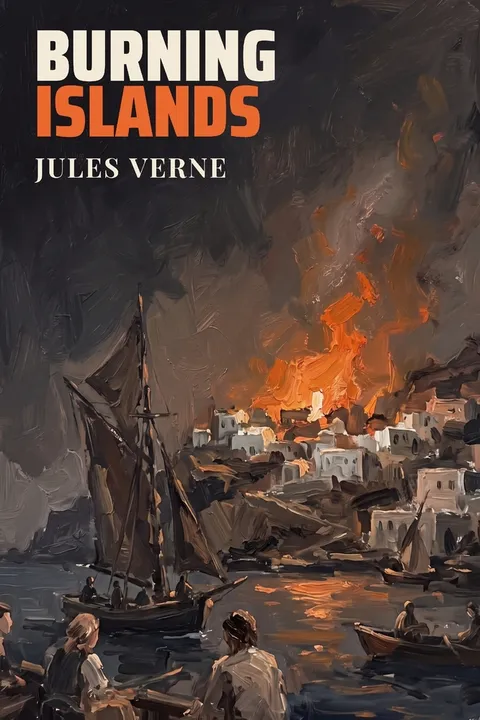
The Aegean, 1827. Greece burns for independence-and one French officer is caught between duty, justice, and impossible love.
Lieutenant Henry d'Albaret commands a French naval vessel patrolling the Greek archipelago during the final years of the Greek War of Independence. His mission: suppress piracy in waters where the line between patriot and criminal has dissolved into chaos. The Ottoman Empire is collapsing. European powers maneuver for advantage. And across the islands, Greeks fight desperately for freedom after four centuries of Turkish rule.
When d'Albaret encounters Hadjine Elizundo, a mysterious Greek woman aboard a captured vessel, he finds himself drawn into conflicts far more dangerous than naval warfare. Hadjine seeks vengeance against Nicholas Starkos, a Greek renegade whose betrayals have brought devastation to her family and her people. As their paths intertwine, d'Albaret must navigate between his orders from the French admiralty, his growing feelings for Hadjine, and his sympathy for the Greek cause.
From the burning fortresses of island strongholds to desperate naval battles in the Aegean's treacherous waters, from political intrigue in European capitals to the intimate dramas of divided loyalties, the story sweeps across a region where ancient history collides with revolutionary fervor.
Jules Verne brings his legendary gift for geographical detail and adventure plotting to the Greek War of Independence, creating a historical romance that captures both the strategic complexity of the conflict and the human passions it unleashed. While less famous than his science fiction masterpieces, The Archipelago on Fire demonstrates Verne's versatility-his ability to render actual history as compellingly as imagined futures, to make real conflicts as thrilling as voyages to the center of the earth.
The novel portrays the Greek struggle for independence with sympathy while acknowledging the war's brutality and moral ambiguities. Verne's meticulous research brings the Aegean world to vivid life: the islands' stark beauty, the naval tactics of the era, the cultural crosscurrents where Greek, Turkish, and European civilizations met and clashed.
From the author of Twenty Thousand Leagues Under the Sea-a stirring tale of war, love, and the fight for freedom in the burning islands of Greece.

Jules Verne
Jules Verne (1828-1905) is considered by many the father of science fiction. Born in Nantes, France, he studied law but turned to writing opera libretti until the 1863 publication of Five Weeks in a Balloon, the first of his Extraordinary Voyages series. Its success encouraged him to produce a number of classic and prophetic science fiction novels, including Journey to the Center of the Earth and Twenty Thousand Leagues under the Sea. His stories foresaw many scientific and technological developments, including the submarine, television, and space travel.
More by Jules Verne







Why Readwise Books?
Readwise Books is an ebook & audiobook platform that automatically logs how much you and your friends read, making it fun and easy to read more. Learn more →