Report an issue
Tell us what's wrong and we'll take a look.
Thanks – we got it. We'll review and follow up if needed.
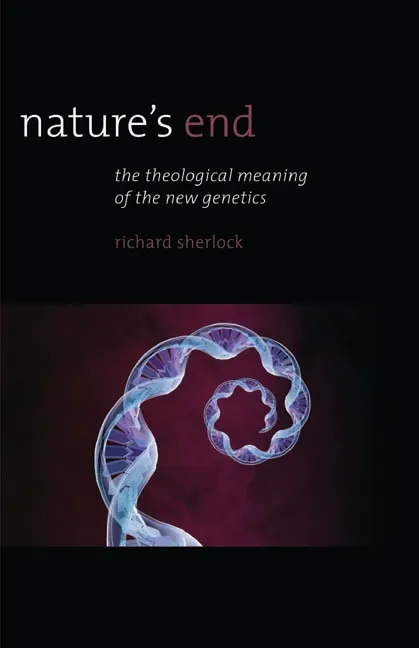
The Western moral tradition has been profoundly influenced by attempts to ground moral convictions in an analysis of human nature, whether conceived in rational, emotional, or biological terms. This idea that nature is the ultimate standard of our actions is found in writers as different as Aristotle, Hume, Hobbes, and Darwin, as well as their modern followers. But in an age of rapid biological changes brought on by biotechnologies such as stem-cell research, gene therapy, and mood-altering drugs, can human nature still serve as a basis for our moral thinking? This is the question explored by Richard Sherlock in Nature's End: The Theological Meaning of the New Genetics. Sherlock contends that in light of the fact that we can now alter human nature we must find a transnatural standpoint from which to make moral judgments--that is, a theological standpoint. Current and future advances in genetic and biological science require a bold theological response, argues Sherlock, not a response based on pragmatism or arguments from nature, including natural-law arguments. Sherlock provocatively calls for moral traditionalists to aim not so much for rational agreement as moral conversion, a "mighty change of heart." Theology must bear witness to its deepest convictions about the meaning of human existence, he writes, and try to get people to see the world anew. Nothing less will serve to meet the deepest moral challenges let loose by the new biosciences.


Why Readwise Books?
Readwise Books is an ebook & audiobook platform that automatically logs how much you and your friends read, making it fun and easy to read more. Learn more →