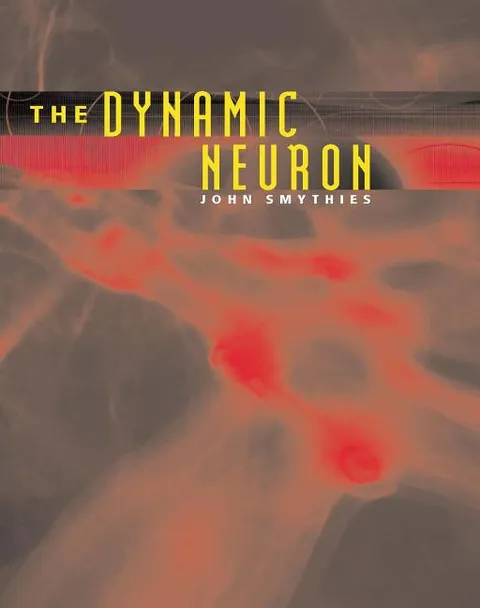
The Dynamic Neuron
Report an issue
Tell us what's wrong and we'll take a look.
Thanks – we got it. We'll review and follow up if needed.
A comprehensive review of current research on synaptic plasticity.
The traditional model of synapses as fixed structures has been replaced by a dynamic one in which synapses are constantly being deleted and replaced. This book, written by a leading researcher on the neurochemistry of schizophrenia, integrates material from neuroscience and cell biology to provide a comprehensive account of our current knowledge of the neurochemical basis of synaptic plasticity.
The book presents the evidence for synaptic plasticity, an account of the dendritic spine and the glutamate synapse with a focus on redox mechanisms, and the biochemical basis of the Hebbian synapse. It discusses the role of endocytosis, special proteins, and local protein synthesis. Additional topics include volume transmission, arachidonic acid signaling, hormonal modulation, and psychological stress. Finally, the book considers pharmacological and clinical implications of current research, particularly with reference to schizophrenia and Alzheimer's disease.
John Smythies
John Raymond Smythies, M.B. B.Chir., M.D., F.R.C.P., F.R.C. Psych. (1922-2019) was the Director of the Integrative Neuroscience Program in the Department of Psychology at the University of California San Diego. As a pre-eminent neuropsychiatrist and neuroscientist he made significant contributions to both these disciplines. Together with Humphry Osmond he developed the first biochemical theory of schizophrenia - the transmethylation hypothesis. This has recently come back into focus following the finding that DNA methylation is abnormal in schizophrenia. He made extensive contributions to knowledge in a number of fields including the neuropharmacology of psychedelic drugs; the functional neuroanatomy of synapses with particular regard to the role of synaptic plasticity, endocytosis and redox factors; the role in the brain of orthoquinone metabolites of catecholamines; and, in particular, theories of brain-consciousness relations. More recently he developed foundational hypotheses and theories specific to the function of exosomes, telocytes and the claustrum, and on epigenetic processes in information processing in the brain. Professor Smythies served as President of the International Society of Psychoneuroendocrinology from 1970-1974, Consultant to the World Health Organization from 1963-1968, and Editor of the International Review of Neurobiology from 1958-1991. He was elected a member of the Athenaeum in 1968. He held the positions of Professor Emeritus and the Charles Byron Ireland Professor of Psychiatric Research at the University of Alabama Medical Center at Birmingham, Visiting Scholar at the Center for Brain and Cognition, University of California San Diego, and Senior Research Fellow at the Institute of Neurology, University College London. He published over 240 scientific papers and sixteen books. https: //en.wikipedia.org/wiki/John_Raymond_Smythies
More by John Smythies




Why Readwise Books?
Readwise Books is an ebook & audiobook platform that automatically logs how much you and your friends read, making it fun and easy to read more. Learn more →