Report an issue
Tell us what's wrong and we'll take a look.
Thanks – we got it. We'll review and follow up if needed.
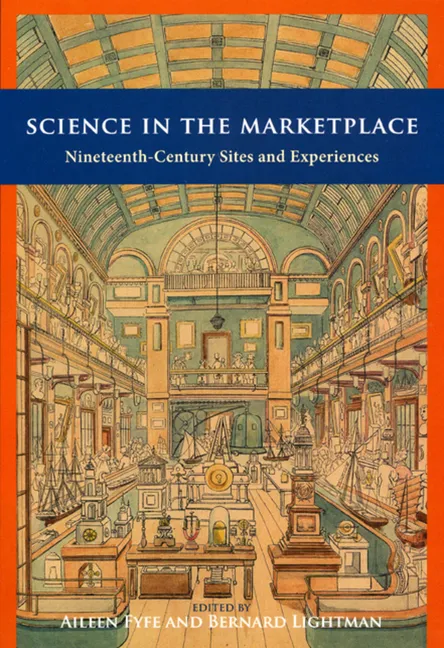
The nineteenth century was an age of transformation in science, when scientists were rewarded for their startling new discoveries with increased social status and authority. But it was also a time when ordinary people from across the social spectrum were given the opportunity to participate in science, for education, entertainment, or both. In Victorian Britain science could be encountered in myriad forms and in countless locations: in panoramic shows, exhibitions, and galleries; in city museums and country houses; in popular lectures; and even in domestic conversations that revolved around the latest books and periodicals.
Science in the Marketplace reveals this other side of Victorian scientific life by placing the sciences in the wider cultural marketplace, ultimately showing that the creation of new sites and audiences was just as crucial to the growing public interest in science as were the scientists themselves. By focusing attention on the scientific audience, as opposed to the scientific community or self-styled popularizers, Science in the Marketplace ably links larger societal changes--in literacy, in industrial technologies, and in leisure--to the evolution of "popular science."
Aileen Fyfe
Aileen Fyfe is lecturer in modern British history at the University of St Andrews, United Kingdom. She is the author of Science in Salvation and coeditor of Science in the Marketplace, both published by the University of Chicago Press, and editor of Science for Children.


Why Readwise Books?
Readwise Books is an ebook & audiobook platform that automatically logs how much you and your friends read, making it fun and easy to read more. Learn more →