Report an issue
Tell us what's wrong and we'll take a look.
Thanks – we got it. We'll review and follow up if needed.
"Churchill's first major historical work is still considered one of his most riveting." -- Library Journal
"It's a great read." -- The Washington Examiner
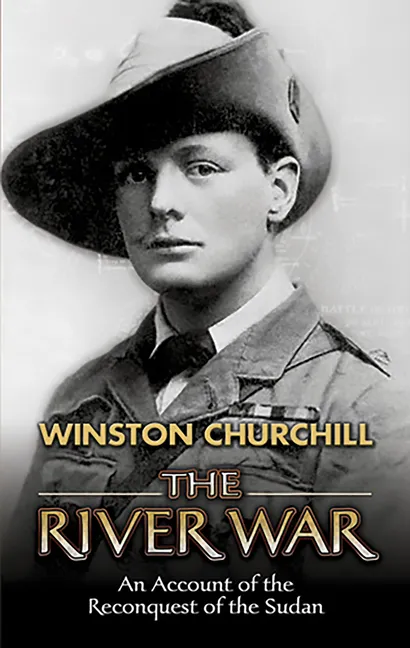
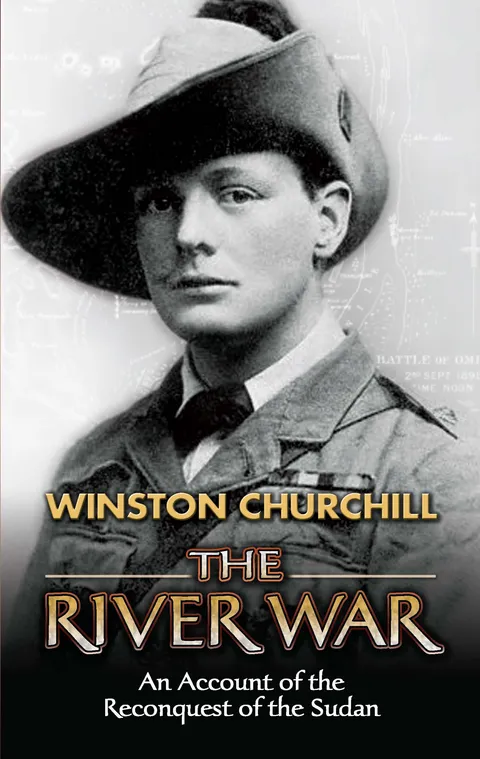
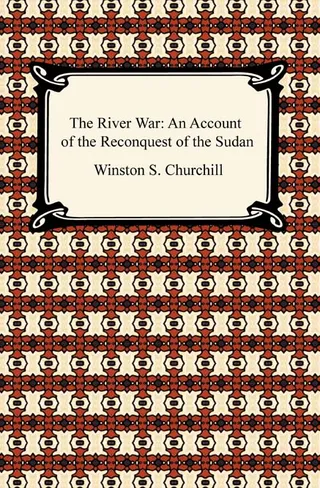
A story of heroism and glory that rivals any work of fiction, this instructive treatise on a Middle Eastern conflict was written by one of history's greatest figures. In The River War, Winston Churchill recounts a critical but often overlooked episode from the days when the British Empire was at the height of its power: the operations directed by Lord Kitchener of Khartoum on the Upper Nile from 1896 to 1899, which led to England's reconquest of the Egyptian Sudan.
After the 1881 rebellion of the Mahdi had plunged the Sudan into chaos, British attempts to withdraw from the region climaxed in General Gordon's ill-fated attempt to rescue officials, soldiers, and Egyptian subjects from Khartoum. A decade later, the British government began its efforts in the pacification and restoration of the Sudan--a mission that succeeded within two years, at the final battle of Omdurman.
Churchill was present at this decisive battle, and he wrote this book while he was still a young cavalry officer. In addition to the future statesman's views of the conflicts and the politics behind them, it shows how the River War altered the fates of England, Egypt, and the Arabian people of northeast Africa. Illustrated by 22 maps and plans, this treatise offers valuable insights into a historic clash of Western and Arabic cultures.
Winston Churchill
Winston Churchill (1874-1965) was a British statesman, politician, and writer. He is best known for his leadership of the United Kingdom during World War II, as well as his oratory skills and numerous literary works. Churchill was born into an aristocratic family and educated at prestigious schools, including Harrow and the Royal Military College at Sandhurst. He served in the British Army and worked as a war correspondent before entering politics in 1900 as a member of parliament for the Conservative Party. Churchill served as First Lord of the Admiralty and was responsible for the disastrous Gallipoli campaign. He later served as Chancellor of the Exchequer in the 1920s and as Prime Minister. Churchill's leadership during World War II, including his inspiring speeches and steadfast determination, helped lead the Allies to victory over Nazi Germany. He is widely regarded as one of the greatest wartime leaders in history. In addition to his political career, Churchill was a prolific writer and won the Nobel Prize in Literature in 1953. He wrote numerous books, including a six-volume history of World War II, and is remembered for his memorable quotes and speeches, including his famous "we shall fight on the beaches" speech in 1940.
More by Winston Churchill





Why Readwise Books?
Readwise Books is an ebook & audiobook platform that automatically logs how much you and your friends read, making it fun and easy to read more. Learn more →