
If Lee Had Not Won Gettysburg
Report an issue
Tell us what's wrong and we'll take a look.
Thanks – we got it. We'll review and follow up if needed.
In December 1930, Sir Winston Churchill, at age 56, wrote his version of what might have been, If Lee Had Not Won the Battle of Gettysburg. He started with the postulation that Lee had been successful at Gettysburg and proceeded from there. The period between the World Wars, Winston sat at his desk to write his tale of a victorious Confederate States of America. He began with the fictional postulation General Lee had indeed been successful at Gettysburg which led to Southern Independence, an unusual approach. Winston carried it through 1914 and hinted of events in the upcoming 1940s.
Winston S. Churchill
Winston Churchill (1874-1965) was a British statesman, politician, and writer. He is best known for his leadership of the United Kingdom during World War II, as well as his oratory skills and numerous literary works. Churchill was born into an aristocratic family and educated at prestigious schools, including Harrow and the Royal Military College at Sandhurst. He served in the British Army and worked as a war correspondent before entering politics in 1900 as a member of parliament for the Conservative Party. Churchill served as First Lord of the Admiralty and was responsible for the disastrous Gallipoli campaign. He later served as Chancellor of the Exchequer in the 1920s and as Prime Minister. Churchill's leadership during World War II, including his inspiring speeches and steadfast determination, helped lead the Allies to victory over Nazi Germany. He is widely regarded as one of the greatest wartime leaders in history. In addition to his political career, Churchill was a prolific writer and won the Nobel Prize in Literature in 1953. He wrote numerous books, including a six-volume history of World War II, and is remembered for his memorable quotes and speeches, including his famous "we shall fight on the beaches" speech in 1940.
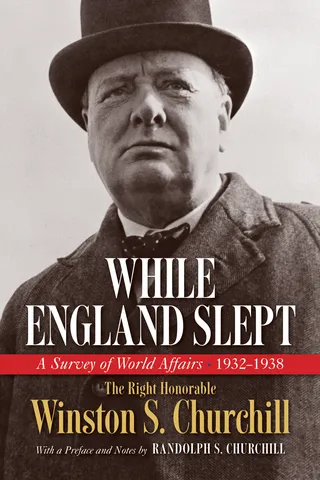
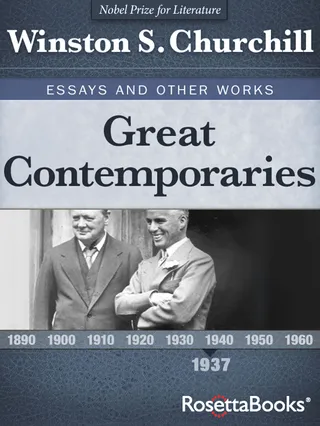
More by Winston S. Churchill




Why Readwise Books?
Readwise Books is an ebook & audiobook platform that automatically logs how much you and your friends read, making it fun and easy to read more. Learn more →