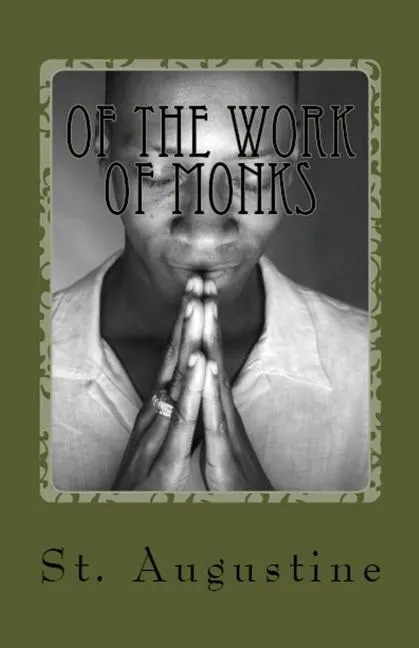
Of the Work of Monks
Report an issue
Tell us what's wrong and we'll take a look.
Thanks – we got it. We'll review and follow up if needed.
To write the Book on the Work of Monks, the need which compelled me was this. When at Carthage there had begun to be monasteries, some maintained themselves by their own hands, obeying the Apostle; but others wished so to live on the oblations of the faithful, that doing no work whence they might either have or supply the necessaries of life, they thought and boasted that they did rather fulfill the precept of the Gospel, where the Lord saith, Behold the fowls of heaven, and the lilies of the field, (Matt. vi. 26). Whence also among laics of inferior purpose, but yet fervent in zeal, there had begun to arise tumultuous contests, whereby the Church was troubled, some defending the one, others the other part. Add to this, that some of them who were for not working, wore their hair long. Whence contentions between those who reprehended and those who justified the practice, were, according to their party affections, increased. On these accounts the venerable old Aurelius, Bishop of the Church of the same city, desired me to write somewhat of this matter; and I did so. This Book begins, "Jussioni tuæ, sancte frater Aureli." This work is placed in the Retractations next after that "On the Good of Marriage" which belongs to the year 401.
St Augustine
Saint Augustine (354–430 CE), also known as Augustine of Hippo, was a Latin philosopher and theologian born on the northern coast of Africa in what is now Algeria. In 386, he had a conversion experience that led him to renounce his career and marital prospects and devote his life to God. His Confessions of Saint Augustine is perhaps the most famous spiritual autobiography of all time.
More by St Augustine






Why Readwise Books?
Readwise Books is an ebook & audiobook platform that automatically logs how much you and your friends read, making it fun and easy to read more. Learn more →