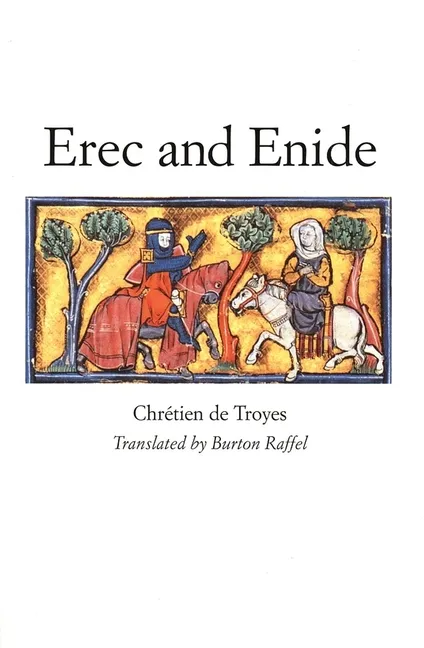
Erec and Enide
Report an issue
Tell us what's wrong and we'll take a look.
Thanks – we got it. We'll review and follow up if needed.
Erec and Enide, the first of five surviving Arthurian romantic poems by twelfth-century French poet Chrétien de Troyes, narrates a vivid chapter from the legend of King Arthur. Chrétien's romances became the source for Arthurian tradition and influenced countless other poets in England and on the Continent. Yet his swift-moving style is difficult to capture in translation, and today's English-speaking audiences remain largely unfamiliar with the pleasures of reading his poems. Now an experienced translator of medieval verse who is himself a poet has translated Eric and Enide in an original three-stress metric verse form that fully captures the movement, the sense, and the spirit of the Old French original. Burton Raffel's rendition preserves the subtlety and charm of a poem that is in turn serious, dramatic, bawdy, merry, and satiric. Erec and Enide tells the story of Erec, a knight at King Arthur's court, whose retirement to domestic bliss with his beautiful new wife Enide takes him away from his chivalric duties. To regain his knightly honor, Erec sets out with Enide on a series of amazing adventures. Eric dispatches thieves and giants with prodigious strength and valor but treats his wife rather harshly for doubting his abilities. When Enide is kidnapped by a robber baron, Erec revives from near-death to perform a courageous rescue, and at length the two are reconciled.
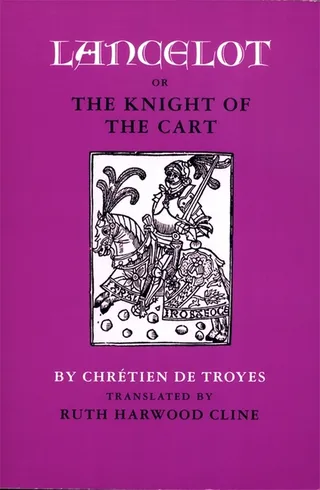

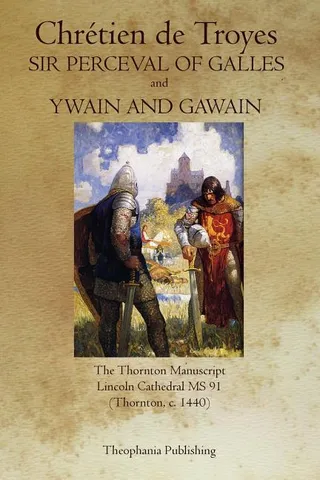

Chretien De Troyes
Chrétien de Troyes was a French author and soldier who lived from 1160 to 1191. He was famous for writing about Arthurian characters like Gawain, Lancelot, Perceval, and the Holy Grail. Some of the most famous works of medieval writing are Chrétien's chivalric romances, such as Erec and Enide, Lancelot, Perceval and Yvain, and others. People see his use of framework, especially in Yvain, as a step toward the modern novel. We don't know much about his life, but he seems to have been from Troyes or very close to it. Gaston Paris thought he might have been a herald-at-arms at the court of his patroness Marie of France, Countess of Champagne, from 1160 to 1172. Marie was the daughter of King Louis VII and Eleanor of Aquitaine and married Count Henry I of Champagne in 1164. He then worked for Philippe d'Alsace, Count of Flanders, at his court. According to Urban T. Holmes III, Chrétien's name, which means "Christian from Troyes" in English, could be the stage name of a Jewish person who converted to Christianity and was also known as Crestien li Gois.
More by Chretien De Troyes

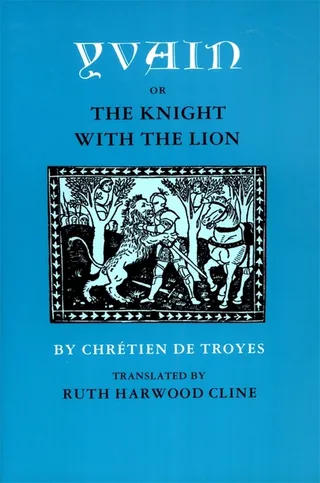



Burton Raffel
Translated by
Burton Raffel is Distinguished Professor of Humanities at the University of Louisiana at Lafayette Emeritus. He is the translator of many works, including Gargantua and Pantagruel (awarded the French-American Foundation Translation Prize), Père Goriot, Beowulf, and the five romances of Chrétien de Troyes.


Why Readwise Books?
Readwise Books is an ebook & audiobook platform that automatically logs how much you and your friends read, making it fun and easy to read more. Learn more →