Report an issue
Tell us what's wrong and we'll take a look.
Thanks – we got it. We'll review and follow up if needed.
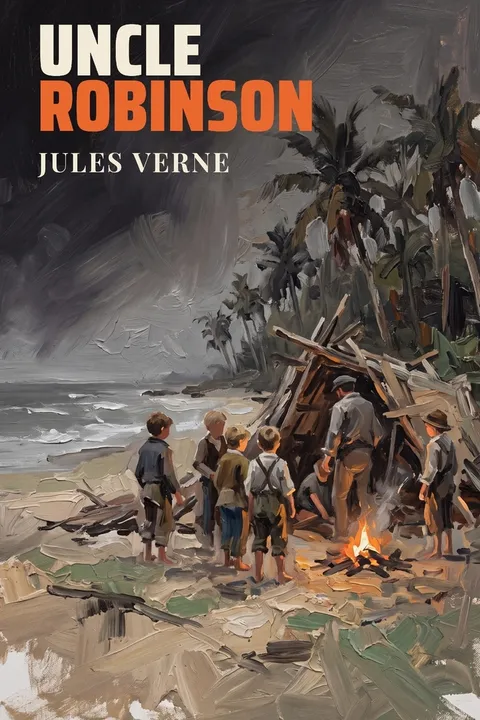
A family shipwrecked on an uninhabited island. Survival through ingenuity and cooperation. And Jules Verne's earliest attempt at the castaway story-unpublished for over a century.
Written around 1861-1862, Uncle Robinson represents Verne's apprentice work-his first sustained engagement with the Robinsonnade tradition that he would later master in The Mysterious Island. A family consisting of uncle, siblings, and young nephew must survive on an isolated island, using practical knowledge and resourcefulness to overcome challenges.
Publisher Pierre-Jules Hetzel rejected the manuscript, apparently finding it too conventional to warrant publication. Verne never sought publication elsewhere, moving forward instead to develop the Voyages Extraordinaires series that would make him legendary. The novel remained unpublished until 1991, appearing more than a century after his death.
Uncle Robinson demonstrates characteristics that would define Verne's mature work: attention to technical detail, emphasis on practical knowledge as tool for survival, faith in human ingenuity. Yet it also reveals his early limitations: thin characterization reducing family members to types, episodic structure lacking dramatic arc, plotting that follows Robinsonnade formula without distinctive innovation, workmanlike prose that hasn't yet achieved his later narrative efficiency.
The novel's value lies primarily in what it reveals about Verne's development-showing him learning his craft before achieving the synthesis of education and imagination that would revolutionize popular fiction. It's apprentice work, historically interesting but artistically inferior to the mature novels that justified his enduring reputation.
For scholars and devoted Verne enthusiasts, it offers glimpse of his evolution. For general readers, it demonstrates that even great writers produce forgettable early work before finding their distinctive voice.
Jules Verne's first castaway story-a literary curiosity showing a master learning his craft, not a lost masterpiece.
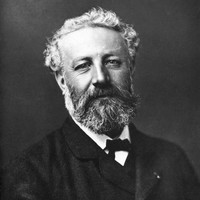
Jules Verne
Jules Verne (1828-1905) is considered by many the father of science fiction. Born in Nantes, France, he studied law but turned to writing opera libretti until the 1863 publication of Five Weeks in a Balloon, the first of his Extraordinary Voyages series. Its success encouraged him to produce a number of classic and prophetic science fiction novels, including Journey to the Center of the Earth and Twenty Thousand Leagues under the Sea. His stories foresaw many scientific and technological developments, including the submarine, television, and space travel.
More by Jules Verne





Why Readwise Books?
Readwise Books is an ebook & audiobook platform that automatically logs how much you and your friends read, making it fun and easy to read more. Learn more →