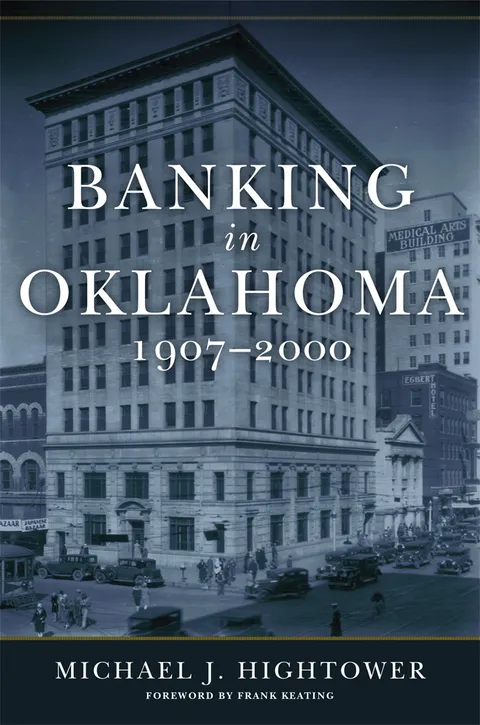
Banking in Oklahoma, 1907-2000
Report an issue
Tell us what's wrong and we'll take a look.
Thanks – we got it. We'll review and follow up if needed.
Through meticulous research and personal interviews with bankers statewide, Hightower has crafted a compelling narrative of Oklahoma banking in the twentieth century. One of the first acts of the new state legislature was to guarantee that depositors in state-chartered banks would never lose a penny. Meanwhile, land and oil speculators and the bankers who funded their dreams were elevating get-rich-quick (and often get-poor-quick) schemes to an art form. In defense of country banks, the Oklahoma Bankers Association dispatched armed vigilantes to stop robbers in their tracks.
Subsequent developments in Oklahoma banking include adaptation to regulations spawned by the Great Depression, the post-World War II boom, the 1980s depression in the oil patch, and changes fostered by rapid-fire advances in technology and communication. The demise of Penn Square Bank offers one of history's few unambiguous lessons, and it warrants two chapters--one on the rise, and one on the fall. Increasing regulation of the banking industry, the survival of family banks, and the resilience of community banking are consistent themes in a state that is only a few generations removed from the frontier.
Michael J Hightower
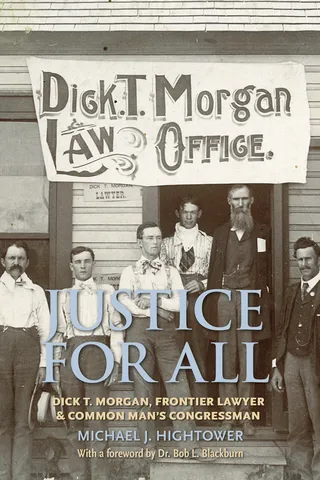
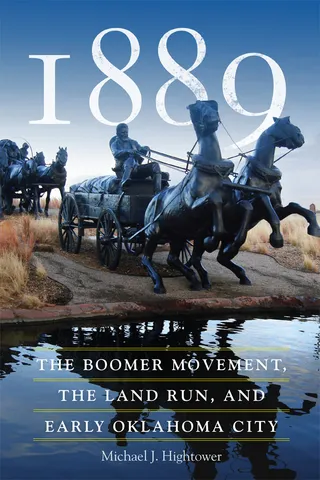
Michael J. Hightower is a fourth-generation Oklahoman and an independent historian and biographer. He is the author of the two-volume chronicle Banking in Oklahoma; 1889: The Boomer Movement, the Land Run, and Early Oklahoma City; and At War with Corruption: A Biography of Bill Price, U.S. Attorney for the Western District of Oklahoma. He has taught sociology at the University of Virginia and Washington and Lee University and splits his time between Oklahoma and Virginia.
More by Michael J Hightower



Why Readwise Books?
Readwise Books is an ebook & audiobook platform that automatically logs how much you and your friends read, making it fun and easy to read more. Learn more →