Report an issue
Tell us what's wrong and we'll take a look.
Thanks – we got it. We'll review and follow up if needed.
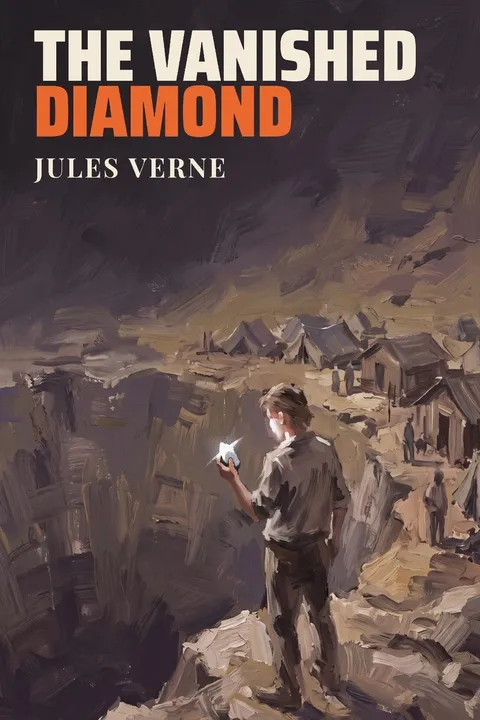
A magnificent diamond discovered in African earth. A mysterious theft. And a young engineer who must solve the crime to clear his name.
Cyprien Méré, a French mining engineer in South Africa's diamond fields, discovers a spectacular gem-the Star of the South, a diamond of unprecedented size and brilliance. But when the stone mysteriously vanishes, Cyprien becomes the prime suspect. To clear his name and win the hand of Alice Watkins, the mine owner's daughter, he must solve the mystery and unmask the real thief.
Jules Verne wrote The Vanished Diamond in 1884, drawing on extensive research about diamond geology and mining operations. The novel demonstrates his characteristic educational mission-readers learn genuinely about how diamonds form, how they're extracted, and how the mining industry operates. The mystery plot is competently constructed, providing conventional detective story satisfactions.
Yet the novel is fundamentally compromised by its colonial framework. South Africa exists in Verne's imagination primarily as resource to be exploited by European enterprise. African peoples appear as laborers, servants, or background elements without complex subjectivity or agency. The narrative assumes European right to extract wealth from African territory without considering indigenous perspectives or interests. African characters, when individualized at all, are portrayed through racist stereotypes.
Verne never questions the colonial system itself-he portrays individual Europeans as more or less ethical, but treats European presence in Africa and appropriation of its mineral wealth as natural and legitimate. The entire drama unfolds among Europeans competing for wealth extracted from African soil, with African labor making that extraction possible but treated as unproblematic rather than as exploitation requiring justification.
Modern readers will find the colonial ideology pervasive and inescapable, the treatment of African characters deeply offensive, and the failure to engage with colonial violence and injustice profoundly limiting.
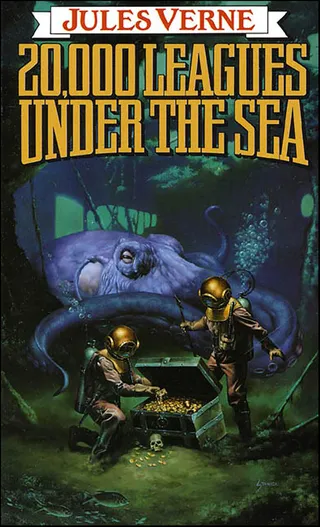
From the author of Twenty Thousand Leagues Under the Sea-adventure fiction that demonstrates how talented writers could unreflectively reproduce colonial assumptions.
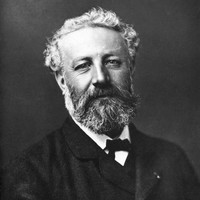
Jules Verne
Jules Verne (1828-1905) is considered by many the father of science fiction. Born in Nantes, France, he studied law but turned to writing opera libretti until the 1863 publication of Five Weeks in a Balloon, the first of his Extraordinary Voyages series. Its success encouraged him to produce a number of classic and prophetic science fiction novels, including Journey to the Center of the Earth and Twenty Thousand Leagues under the Sea. His stories foresaw many scientific and technological developments, including the submarine, television, and space travel.
More by Jules Verne




Why Readwise Books?
Readwise Books is an ebook & audiobook platform that automatically logs how much you and your friends read, making it fun and easy to read more. Learn more →