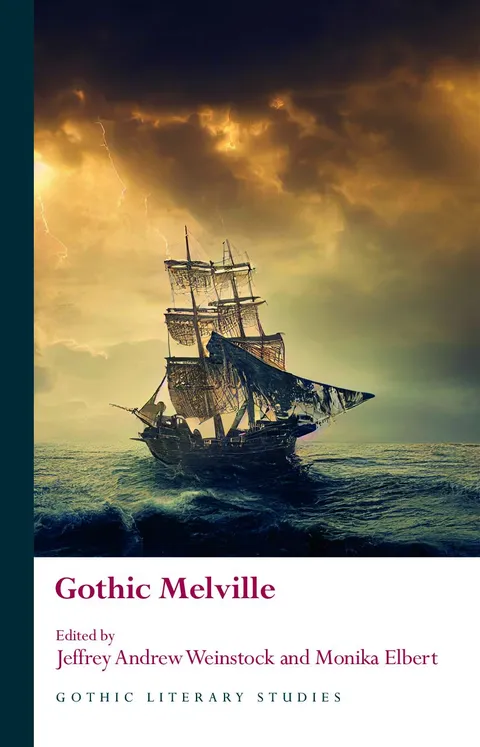
Gothic Melville
Report an issue
Tell us what's wrong and we'll take a look.
Thanks – we got it. We'll review and follow up if needed.
In a famous review of Nathaniel Hawthorne’s Mosses from an Old Manse, Herman Melville took the critics to task for missing the darkness as the heart of Hawthorne’s writing – a blackness ‘ten times black’, as Melville put it, that fascinated him. Ironically, Melville has been subject to the same treatment by critics who have in large measure steered clear of Melville’s own darkness. The contributors to Gothic Melville reveal that, if Hawthorne’s darkness is ten times black, then Melville’s is a hundred times so, as his works repeatedly raise questions about what the truth is or if truth exists at all.
This edited collection of scholarly essays makes up for the critical neglect of Melville’s Gothicism by arguing that the Gothic is so extensively interwoven into the fabric of his writing that Melville must at last be recognised as among the genre’s most important practitioners.
Jeffrey Andrew Weinstock
Jeffrey Andrew Weinstock is Professor of English at Central Michigan University and associate editor in charge of horror for the Los Angeles Review of Books. His most recent books include Giving the Devil His Due: Satan and Cinema (with Regina Hansen, Fordham, 2021), The Monster Theory Reader (University of Minnesota Press, 2020), and The Cambridge Companion to the American Gothic (Cambridge University Press, 2018). Visit him at JeffreyAndrewWeinstock.com.


Why Readwise Books?
Readwise Books is an ebook & audiobook platform that automatically logs how much you and your friends read, making it fun and easy to read more. Learn more →