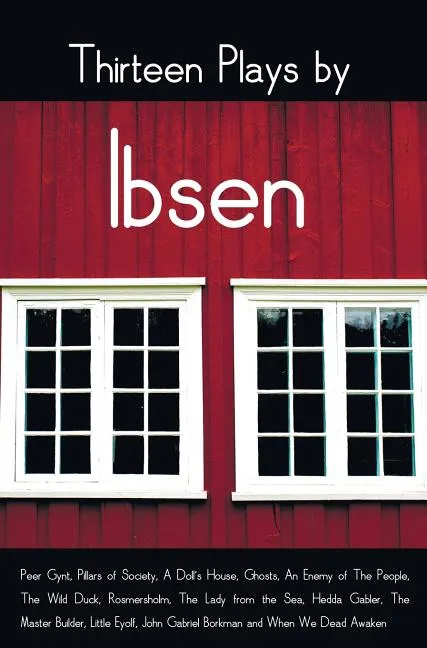
Thirteen Plays by Ibsen, including (complete and unabridged)
Peer Gynt, Pillars of Society, A Doll's House, Ghosts, An Enemy of The People, The Wild Duck, Rosmersholm, The Lady from the Sea, Hedda Gabler, The Master Builder, Little Eyolf, John Gabriel Borkman and When We Dead Awaken
Report an issue
Tell us what's wrong and we'll take a look.
Thanks – we got it. We'll review and follow up if needed.
Blurb: Henrik Ibsen (1828 - 1906) was a major 19th-century Norwegian playwright, theatre director, and poet. He is often referred to as "the father of realism" and is one of the founders of Modernism. He is the most frequently performed dramatist in the world after Shakespeare, and A Doll's House became the world's most performed play by the early 20th century. At the time that they were written, several of Ibsen's plays were scandalous. The theatre was expected to model strict morals of family life and propriety; but Ibsen explored the realities that lay behind the façades, making his plays uncomfortable to watch. Ibsen was born into a merchant family in Skien, a port town in Norway, and many of his plays are set in places reminiscent of his family home. Ibsen is widely considered to be the greatest playwright since Shakespeake and influenced scores other writers including: George Bernard Shaw, Oscar Wilde, Arthur Miller, James Joyce, Eugene O'Neill and Miroslav Krleza. This volume brings together his thirteen greatest plays.
Henrik Ibsen
Henrik Ibsen (1828-1906) has been described as 'the father of modern theatre'. Most of his early plays were traditional historical dramas. After 'Peer Gynt', a fairy-tale fantasy in verse, Ibsen wrote the rest of his plays in prose, and came to be regarded as the great Naturalist dramatist.
More by Henrik Ibsen



Why Readwise Books?
Readwise Books is an ebook & audiobook platform that automatically logs how much you and your friends read, making it fun and easy to read more. Learn more →