Report an issue
Tell us what's wrong and we'll take a look.
Thanks – we got it. We'll review and follow up if needed.
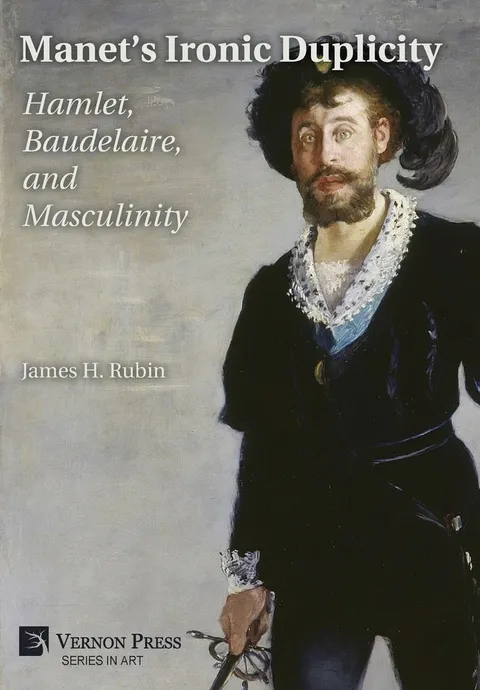
The painter Edouard Manet (1832-1883) was a central figure for momentous and lasting changes in the realm of art that still resound today. His art speaks directly to the philosophical issues and political conflicts of his own time and is therefore deeply embedded in the development of modernity. 'Manet's Ironic Duplicity' focuses on that situation and the historically conscious artist's sometimes ambivalent struggle for authenticity. Rather than another full chronological monograph, the book is an interdisciplinary study organized around key concepts. It reframes the major, and sometimes disparate issues in Manet scholarship by focusing on a never-before-considered overriding theme-duplicity-which itself is multiple in its manifestations and variants, hence 'duplicities'. Reversing the usual narrative, this study deconstructs and enlightens the myth of the heroic artist struggling for individual and original vision by revealing how so much of Manet's creativity and irony was prompted by frustrations due to repressive politics, censorship, and challenges to his sense of self. A key aspect of the latter was his masculinity.
Although Manet's association with the ideas of the poet and critic Charles Baudelaire is well known, never has Baudelaire's essay 'On the Essence of Laughter and the Comic in the Visual Arts' been brought to bear on the concept of irony in Manet's work. Given Baudelaire's rapprochement between actors and artists, as well as Manet's familiarity with the theatrical milieu, the book focuses on Manet's two little-studied representations of 'Hamlet' as both the starting and end point of its analysis. It then concludes with a re-reading of the painter's illustrated letters to women as a dissimulation of his final, fatal illness in order to maintain his masculine honor.
James H Rubin
James H. Rubin is Professor Emeritus of Art History at Stony Brook University. He is the author of thirteen books, including Impressionism; Impressionist Cats and Dogs: Pets in the Painting of Modern Life; and Impressionism and the Modern Landscape: Productivity, Technology, and Urbanization from Manet to Van Gogh, as well as more than seventy articles and exhibition catalog essays on nineteenth-century French art.
More by James H Rubin


Why Readwise Books?
Readwise Books is an ebook & audiobook platform that automatically logs how much you and your friends read, making it fun and easy to read more. Learn more →