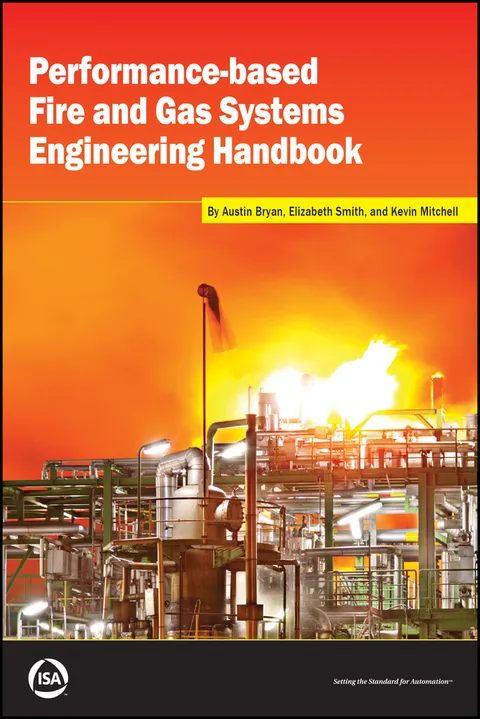
Performance-based Fire and Gas Systems Engineering Handbook
Report an issue
Tell us what's wrong and we'll take a look.
Thanks – we got it. We'll review and follow up if needed.
With the release of the technical report, ISA-TR84.00.07-2018, Guidance on the Evaluation of Fire, Combustible Gas, and Toxic Gas System Effectiveness, on performance-based design of fire and gas detection systems for process industries, risk-based techniques for detector placement have become prevalent in fire and gas system (FGS) design. While the technical report addresses designing the FGS based on the user's risk profile and performance requirements, it does not provide any guidance on implementing the FGS lifecycle.
The Performance-based Fire and Gas Systems Engineering Handbook provides a thorough overview of the FGS design lifecycle presented in the technical report, examining each lifecycle phase and the practical activities required to develop an FGS design. In addition to discussing the design process, this handbook provides valuable appendices containing data for FGS system risk analysis, FGS risk grading procedures and a discussion of the FGS mapping techniques used to verify the achievement of the newly defined coverage targets.
Elizabeth Smith
Les and Elizabeth Smith live in Perthshire in Scotland and, after following sensible careers as scientist and geographer respectively, have embraced a more flexible outdoor life, pursuing their love of Scotland, wild places, wild life and photography. Enthusiastic hikers and campers, they have backpacked along many long-distance routes, both in the UK and more widely in Europe. This is their first guidebook, now updated in a second edition.
More by Elizabeth Smith













Why Readwise Books?
Readwise Books is an ebook & audiobook platform that automatically logs how much you and your friends read, making it fun and easy to read more. Learn more →