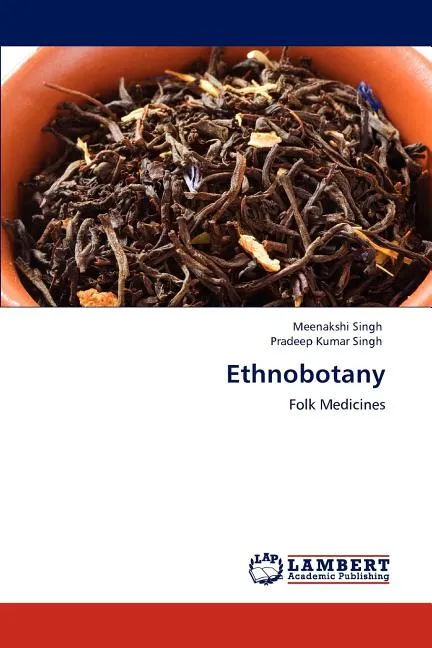
Ethnobotany
Report an issue
Tell us what's wrong and we'll take a look.
Thanks – we got it. We'll review and follow up if needed.
Ethnobotany is the study of how and for what reasons people use plants. Usage usually relates to people's conceptualization of the importance of plants, medicinally and otherwise, and their experience of plants occurring in their local environment. The meaning of the term "ethnobotany" changed from the "study of native uses of plants" to a more scientific.Ethnobotany maintains a multidisciplinary character: botanically, plants and plant uses are the focus, although ecological patterns, plant dispersals, resources utilization and horticultural and agricultural patterns have become popular avenues of study among Ethnobotanists. Traditional medicine or, more appropriately, traditional systems of health care, have undergone a major revival in the last twenty years. Every region historically had a form of traditional medicine or a traditional system of health care. Chinese, Arabic, African and other traditional medicines are traditional because they are deeply rooted in a specific social-cultural context, which varies between communities.
Meenakshi Singh
Prof. Meenakshi Singh is a Professor in the Dept. of Chemistry, at Banaras Hindu University, in India. Prof. Singh's research is currently focused on designing novel polymeric formats for crafting molecular recognition elements to device sensors for biomolecules/drugs/proteins/virus using molecular imprinting technology.
These functionalized polymeric frameworks are incorporated in analytical technology based on molecularly imprinted polymers for detection of target molecules. The molecular imprinting technique using zwitterionic polymeric format functionalized over surface for scrutinizing their bicompatibilty. Additionally, theoretical predictions of geometry and other vital parameters of newly synthesized monomers using ab-initio methods are also carried out. Polymeric hydrogels/organogels are also designed and examined for their characteristics to explore their application as functional materials for application in drug-delivery, waste-water treatment and/or other industrial applications. The group has shown water-compatible imprinting with novel polymer format in which the entire imprinting protocol is followed in water only for selective and sensitive detection of many drug molecules amino acids, peptides, proteins by molecular imprinting. Recently this laboratory is working on development of diagnostic tool for common diseases through 'epitope imprinting' approach for detection of proteins from virus/bacteria causing infection. This approach was successfully tested on patients and has already been reported in journals through publication of papers.
Prof. Singh's interests also include environmental chemistry, solid phase extraction, solid phase microextraction, electroanalysis and detection principles for chemical analysis. Currently, her group are engaged in developing MIP-QCM-sensor for biomolecules. A pioneer in the field of molecular imprinting in India. Prof. Singh has published 61 articles in international peer reviewed journals. 3 book chapters, and 1 book, with more than 400 citations.
More by Meenakshi Singh




Why Readwise Books?
Readwise Books is an ebook & audiobook platform that automatically logs how much you and your friends read, making it fun and easy to read more. Learn more →