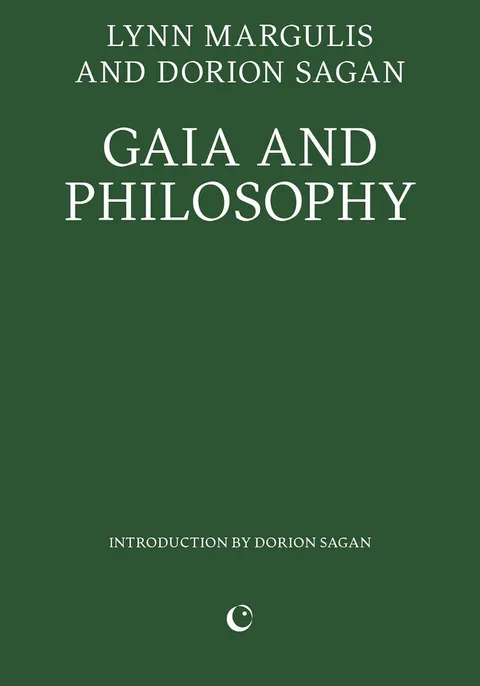
Gaia and Philosophy
Report an issue
Tell us what's wrong and we'll take a look.
Thanks – we got it. We'll review and follow up if needed.
In the 1970s, microbiologist Lynn Margulis and atmospheric chemist James Lovelock developed the Gaia theory. Embracing the circular logic of life and engineering systems, the Gaia theory states that Earth is a self-regulating complex system in which life interacts with and eventually becomes its own environment. Gaia describes a living Earth: a body in the form of a planet. Fusing science, mathematics, philosophy, ecology and mythology, *Gaia and Philosophy*, with a new introduction by Dorion Sagan, challenges Western anthropocentrism to propose a symbiotic planet. In its striking philosophical conclusion, the revolutionary Gaia paradigm holds important implications not only for understanding life's past but for shaping its future.



Why Readwise Books?
Readwise Books is an ebook & audiobook platform that automatically logs how much you and your friends read, making it fun and easy to read more. Learn more →