Report an issue
Tell us what's wrong and we'll take a look.
Thanks – we got it. We'll review and follow up if needed.
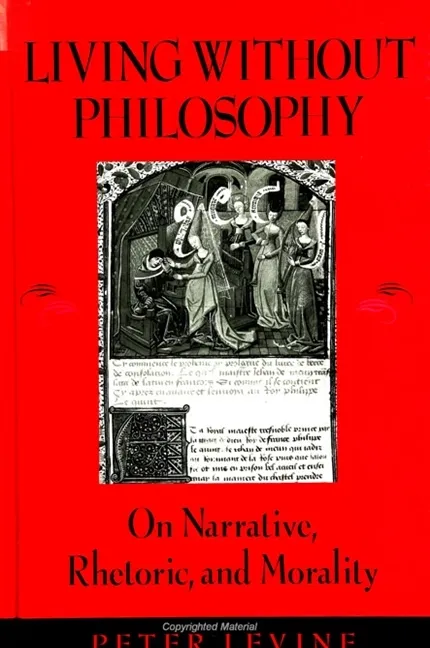
Drawing on implications from ethics, theology, law, politics, and education, this book argues that we can decide what is right by describing particular cases in detail, without the aid of ethical theories and principles.
Living Without Philosophy argues that we do not need ethical theories, rules, and principles to decide what is right. Instead, particular cases can be judged by a detailed description of the relevant circumstances. When our judgments differ, we can decide how to act by deliberating under fair conditions. The author provides both a philosophical argument for this position and readings of literary texts in which moral theorists are portrayed as concrete characters. These works include Plato's Protagoras, selections from the Gospels and Dante, Boethius's Consolation of Philosophy, the debate between Erasmus and Luther, Erasmus's Praise of Folly, Shakespeare's King Lear, Nabokov's Lolita, and Martin Luther King's Letter from a Birmingham Jail. Thus, Levine offers essentially a moral argument for the humanities, discussing the implications not only for ethics, but also for theology, law, politics, and education.


Why Readwise Books?
Readwise Books is an ebook & audiobook platform that automatically logs how much you and your friends read, making it fun and easy to read more. Learn more →