Report an issue
Tell us what's wrong and we'll take a look.
Thanks – we got it. We'll review and follow up if needed.
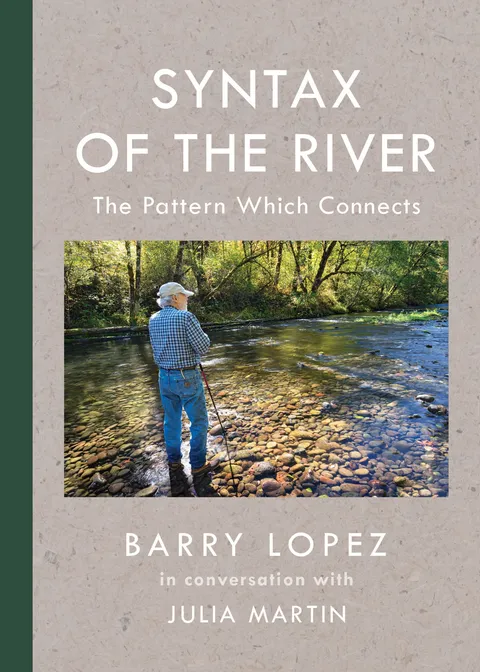
Barry Lopez had no illusions about the seriousness of our global crisis, yet he also felt a deep conviction about the power of hope and the sources of renewal in the living world. Syntax of the River is an extended conversation spanning three days between Lopez and Julia Martin in which he explores what this juxtaposition means for him as a writer.
On the first day Lopez reflects on years watching the McKenzie River near his home in Oregon. He describes the quality of attention he learned from intimacy with the place itself: a very fine distinction between silence and stillness, the rich complexities of the present moment, and the syntax of interrelationships between living things.
The second day is concerned with craft: the work of making sentences and books. Lopez shares his practical strategies for writing and revising a manuscript and goes on to speak about vulnerability. He says he often experienced a deep sense of doubt about his capacity to achieve whatever he was trying to do in a particular project. Over time, though, this characteristic experience of not-knowing became a kind of fuel for his work, and even a weapon at times.
On the final day, Lopez ponders the idea of writing as a praxis, a way of life, even a prayer for the earth, while concurrently being terrified by the portents of its destruction. Here, the experience of being an attentive participant emerges as his core teaching. Over the decades he developed a practice of attention that was endlessly curious and enthralled by the living world, what he calls its pattern or syntax. Despite acclaim as a celebrated writer, throughout his career Lopez humbly tasked himself with making a combination of wonder and horror work together to effectively communicate a life journey of contemplation, exploration, and discovery.
Barry Lopez
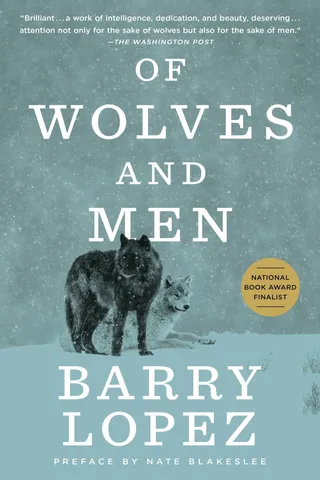
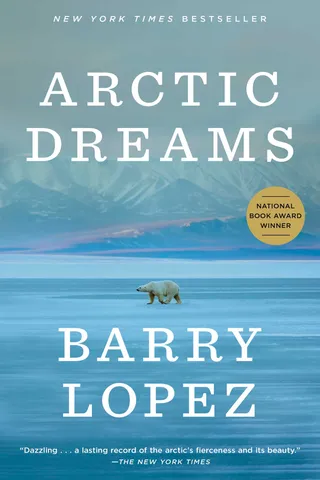
Barry Lopez (1945–2020) was the author of thirteen books of essays, short stories, and nonfiction. He was a recipient of the National Book Award, the Award in Literature from the American Academy of Arts and Letters, a Guggenheim Fellowship, and numerous other literary and cultural honors and awards. His highly acclaimed books include Arctic Dreams, Winter Count, and Of Wolves and Men, for which he received the John Burroughs and Christopher medals. He lived in western Oregon.
More by Barry Lopez
Julia Martin
Julia Martin is a South African writer and literary scholar. Her longstanding involvement in the work of Gary Snyder is part of a broader interest in ecological thought, metaphors of interconnectedness, and the representation of place. She enjoys experimenting with creative nonfiction, and her travel memoir, A Millimetre of Dust: Visiting Ancestral Sites, is a narrative essay about archaeology and the apprehension of deep time. She lives with her family in Cape Town, where she teaches English at the University of the Western Cape.
More by Julia Martin




Why Readwise Books?
Readwise Books is an ebook & audiobook platform that automatically logs how much you and your friends read, making it fun and easy to read more. Learn more →