Report an issue
Tell us what's wrong and we'll take a look.
Thanks – we got it. We'll review and follow up if needed.
Helena Petrovna Blavatsky (1831-1891) co-founded the Theosophical Society in 1875 and authored the major texts of the movement: Isis Unveiled (1877), The Secret Doctrine (1888), The Key to Theosophy (1889), and The Voice of the Silence (1889). She inspired many artists including Alexander Scriabin, Wassily Kandinsky, Piet Mondrian, Hilma af Klint, Nicholas Roerich, and Max Beckmann. Also, her thought played a decisive role for Rudolf Steiner, George Gurdjieff, and so many others that she has been called "the Mother of Modern Spirituality" and "the Mother of New Age."
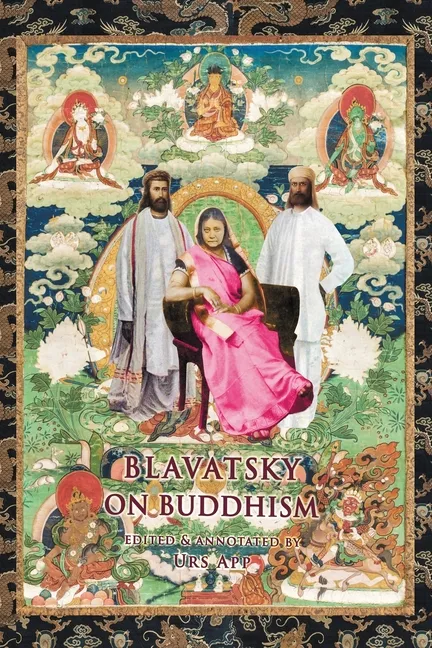
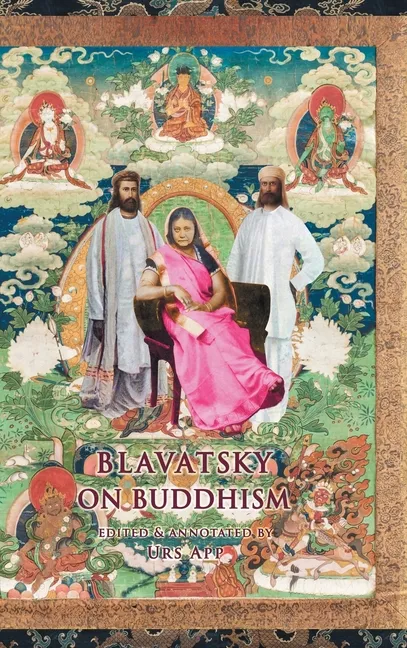
Blavatsky on Buddhism presents 31 interviews, letters, and articles of the prolific Russian author that document the development of her acquaintance with Buddhism during her most productive dozen years (1877-1889). Hers is not just a splendid example of 19th-century reception of Buddhism in the West, but a case that-due to the unique wealth of extant sources-may well be the best documented one.
After founding the Theosophical Society in 1875, Madame Blavatsky began to proclaim in newspaper interviews and letters to be a Buddhist, and in 1880 she became one of the first Westerners to take the Buddhist lay precepts at a temple in Sri Lanka. She subsequently claimed to have spent more than seven years in Tibet studying with Adepts ("Mahatmas"), heirs to an esoteric wisdom tradition so ancient that even Gautama Buddha had been schooled in it.
A voracious reader, Madame Blavatsky gathered an impressive amount of information about Asia's greatest religion and belligerently defended her idiosyncratic vision of Buddhism and Buddhist history against the very orientalists whose books she had intensively studied and copiously used.
Urs App, the renowned historian of the Western reception of Buddhism and author of The Birth of Orientalism (2010) and The Cult of Emptiness (2012), edited this volume and identified in his numerous notes and comments a great many sources used by Blavatsky in the course of her studies.
Helena Petrovna Blavatsky
Helena Petrovna Blavatsky (1831-1891) was a prominent Russian occultist, writer, and co-founder of the Theosophical Society. Born in Yekaterinoslav, Russia (now Dnipro, Ukraine), Blavatsky exhibited a fascination with spiritual and esoteric matters from a young age. She traveled extensively, exploring various parts of the world, including India and Tibet. Blavatsky's most influential work is "The Secret Doctrine," a comprehensive study of ancient wisdom, philosophy, and spiritual traditions. This monumental work has had a profound impact on the fields of esotericism, mysticism, and theosophy. As a charismatic figure, Blavatsky attracted a wide following and became known for her psychic abilities and alleged encounters with supernatural phenomena. Despite facing criticism and skepticism, she remained a dedicated advocate for the study of occultism and the promotion of universal brotherhood. Helena Petrovna Blavatsky's life and work continue to inspire and provoke thought in the realms of spirituality, metaphysics, and the study of human consciousness. Her contributions to the understanding of esoteric knowledge and her role in the establishment of the Theosophical Society have left a lasting legacy in the world of mystical and philosophical thought.
More by Helena Petrovna Blavatsky




Why Readwise Books?
Readwise Books is an ebook & audiobook platform that automatically logs how much you and your friends read, making it fun and easy to read more. Learn more →