Report an issue
Tell us what's wrong and we'll take a look.
Thanks – we got it. We'll review and follow up if needed.
The Society for Textual Scholarship Richard J. Finneran Award, Honorable Mention, 2023.
For the best edition or book about editorial theory and/or practice published in the English language during 2021-2022.
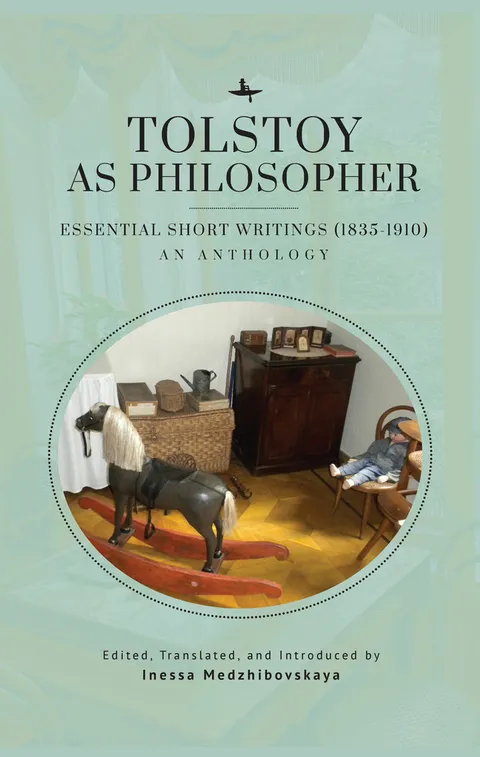
Beginning with Tolstoy's first extant records of his written oeuvre, this anthology assembles seventy-seven unabridged texts that cover more than seven decades of his life, from 1835 to 1910. It constitutes the most complete single-volume edition to date of the rich variety of Tolstoy's philosophical output: apothegmatic sayings, visions, intimate sketchbook and day notes, book reviews, open letters, dialogues, pedagogic talks, public lectures, programs and rules for personal behavior, fictions, and reminiscences. Most of these newly translated and thoroughly annotated texts have never been available in English. Among the four reprinted translations personally checked and authorized by Tolstoy is the text titled "Tolstoy on Venezuela," an archival restoration of an authentic first publication in English of "Patriotism, or Peace?" (1896) that had been deemed lost. In the inaugural piece, a seven-year-old Tolstoy describes violent but natural animal life in contrast with the lazy life of a peaceful barnyard in the countryside. The last entry in the anthology written by an eighty-year-old Tolstoy for his grandchildren provides a lesson on vegetarianism and non-violence that a hungry wolf teaches a hungry boy during their conversation when both are on their way to lunch.
It was the insolvable, the "scandalous," problems of philosophy that never gave Tolstoy any rest: freedom of the will, religious tolerance, gender inequality, the tonal shape of music, the value of healthy life habits, the responsibilities of teaching, forms of social protest, cognitive development, science in society, the relation between body and mind, charity and labor, human dignity and public service, sexual psychology, national war doctrines, suicide, individual sacrifice, the purposes of making art. And always: What are the sources of violence? Why should we engage in politics? Why do we need governments? How can one practice non-violence? What is the meaning of our irrepressible desire to seek and find meaning? Why can't we live without loving? The typeset proofs of his final insights were brought to Tolstoy for approval when he was already on his deathbed. The reader will find all the texts in the exact shape and order of completion as Tolstoy left them. No matter their brevity or the occasion on which they were written, these works exemplify Tolstoy as an artistically inventive and intellectually absorbing thinker.
Leo Tolstoy
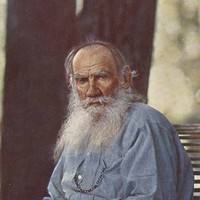
Leo Tolstoy (1828-1910) was a Russian author of novels, short stories, novellas, plays, and philosophical essays. He was born into an aristocratic family and served as an officer in the Russian military during the Crimean War before embarking on a career as a writer and activist. Tolstoy’s experience in war, combined with his interpretation of the teachings of Jesus, led him to devote his life and work to the cause of pacifism. In addition to such fictional works as War and Peace (1869), Anna Karenina (1877), and The Death of Ivan Ilyich (1886), Tolstoy wrote The Kingdom of God is Within You (1893), a philosophical treatise on nonviolent resistance which had a profound impact on Mahatma Gandhi and Martin Luther King Jr. He is regarded today not only as one of the greatest writers of all time, but as a gifted and passionate political figure and public intellectual whose work transcends Russian history and literature alike.
More by Leo Tolstoy


Why Readwise Books?
Readwise Books is an ebook & audiobook platform that automatically logs how much you and your friends read, making it fun and easy to read more. Learn more →