Report an issue
Tell us what's wrong and we'll take a look.
Thanks – we got it. We'll review and follow up if needed.
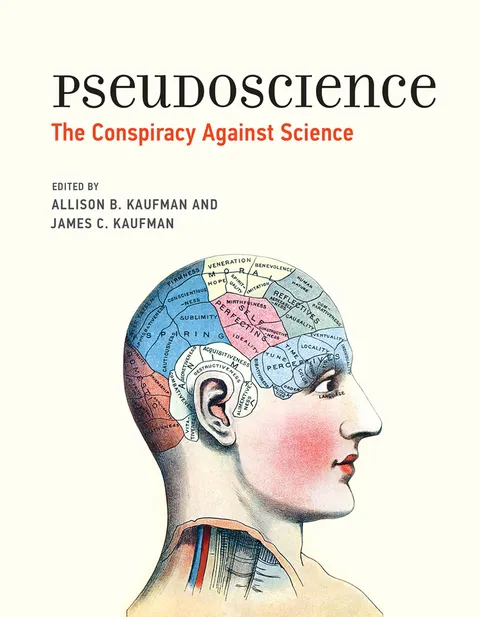
In a post-truth, fake news world, we are particularly susceptible to the claims of pseudoscience. When emotions and opinions are more widely disseminated than scientific findings, and self-proclaimed experts get their expertise from Google, how can the average person distinguish real science from fake? This book examines pseudoscience from a variety of perspectives, through case studies, analysis, and personal accounts that show how to recognize pseudoscience, why it is so widely accepted, and how to advocate for real science.
Contributors examine the basics of pseudoscience, including issues of cognitive bias; the costs of pseudoscience, with accounts of naturopathy and logical fallacies in the anti-vaccination movement; perceptions of scientific soundness; the mainstream presence of "integrative medicine," hypnosis, and parapsychology; and the use of case studies and new media in science advocacy.
Contributors
David Ball, Paul Joseph Barnett, Jeffrey Beall, Mark Benisz, Fernando Blanco, Ron Dumont, Stacy Ellenberg, Kevin M. Folta, Christopher French, Ashwin Gautam, Dennis M. Gorman, David H. Gorski, David K. Hecht, Britt Marie Hermes, Clyde F. Herreid, Jonathan Howard, Seth C. Kalichman, Leif Edward Ottesen Kennair, Arnold Kozak, Scott O. Lilienfeld, Emilio Lobato, Steven Lynn, Adam Marcus, Helena Matute, Ivan Oransky, Chad Orzel, Dorit Reiss, Ellen Beate Hansen Sandseter, Kavin Senapathy, Dean Keith Simonton, Indre Viskontas, John O. Willis, Corrine Zimmerman
James C Kaufman
Dr James C. Kaufman is a Professor of Educational Psychology at the Neag School of Education at the University of Connecticut. He is the author or editor of more than fifty books and has written more than four hundred papers, including theoretical contributions such as the Four-C model of creativity (with Ron Beghetto).


Why Readwise Books?
Readwise Books is an ebook & audiobook platform that automatically logs how much you and your friends read, making it fun and easy to read more. Learn more →