
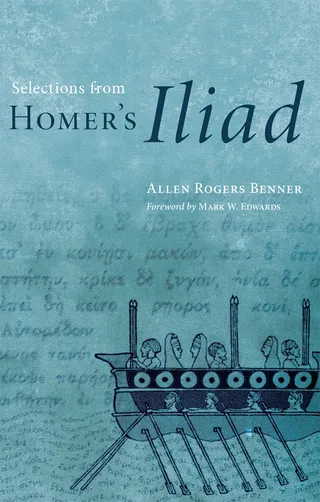
Selections From Homer's Iliad
Report an issue
Tell us what's wrong and we'll take a look.
Thanks – we got it. We'll review and follow up if needed.
This work has been selected by scholars as being culturally important, and is part of the knowledge base of civilization as we know it.
This work is in the "public domain in the United States of America, and possibly other nations. Within the United States, you may freely copy and distribute this work, as no entity (individual or corporate) has a copyright on the body of the work.
Scholars believe, and we concur, that this work is important enough to be preserved, reproduced, and made generally available to the public. We appreciate your support of the preservation process, and thank you for being an important part of keeping this knowledge alive and relevant.
Homer
Homer is the name traditionally given to the ancient Greek poet credited with composing The Iliad and The Odyssey. Little is known with certainty about his life, and scholars continue to debate whether the epics were created by a single poet or developed through generations of oral performance before being written down. He is generally believed to have lived during the eighth century BCE, possibly in the Greek-speaking regions of Asia Minor.The two epics attributed to Homer became the foundation of Greek education, literature, and cultural identity. Their influence extends throughout Western storytelling, shaping later epic poetry, drama, philosophy, history, and the modern novel. Homer's portrayals of war, honor, fate, family, leadership, and human endurance continue to speak to readers across cultures and centuries.
More by Homer



Why Readwise Books?
Readwise Books is an ebook & audiobook platform that automatically logs how much you and your friends read, making it fun and easy to read more. Learn more →