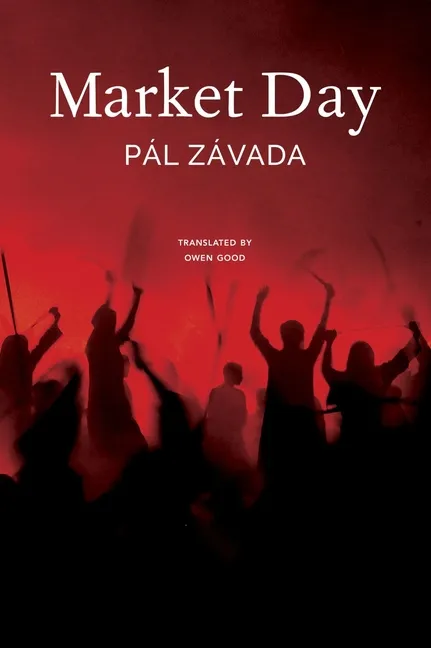
Market Day
Report an issue
Tell us what's wrong and we'll take a look.
Thanks – we got it. We'll review and follow up if needed.
What could bring people to form a mob and attack others? What circumstances could provoke a thirst for blood at the market square? Who will gang up to batter their neighbor, improbably returned from deportation? How can a person be swept up among lynchers?
Pál Závada's novel examines and analyses the anti-Semitic mass hysteria and political opportunism surrounding the pogroms in Hungary that followed World War II and the Holocaust. In May 1946, at the village market, Mária Csóka witnessed a group of women set upon and beat to death a Jewish egg seller. The wife of a schoolteacher accused of anti-Semitic incitement, and daughter of a respected shopkeeper, Mária fears for her husband's life yet cannot ignore the victims. The murderous fury spreads through the neighborhood like wildfire, dragging out women, children, and the elderly alike. Mária's notes from the bloody day at the village market and from the subsequent trial in Budapest testify to a state of human relations that is intimately complex and irreparably scarred.
Pál Závada
Pál Závada was born in a Hungarian Slovak family in 1954 in Tótkomlós, Hungary. A sociologist by training, Závada is the author of six novels, for which he has won numerous awards.
Owen Good
Translated by
Owen Good, born in Northern Ireland, is a translator of Hungarian poetry and prose. His translations of Krisztina Tóth's work received Asymptote's Close Approximations Prize and was nominated for the TA First Translation Prize, the EBRD Literary Prize, and the Warwick Prize for Women in Translation.


Why Readwise Books?
Readwise Books is an ebook & audiobook platform that automatically logs how much you and your friends read, making it fun and easy to read more. Learn more →