The Wild Orchid
Report an issue
Tell us what's wrong and we'll take a look.
Thanks – we got it. We'll review and follow up if needed.
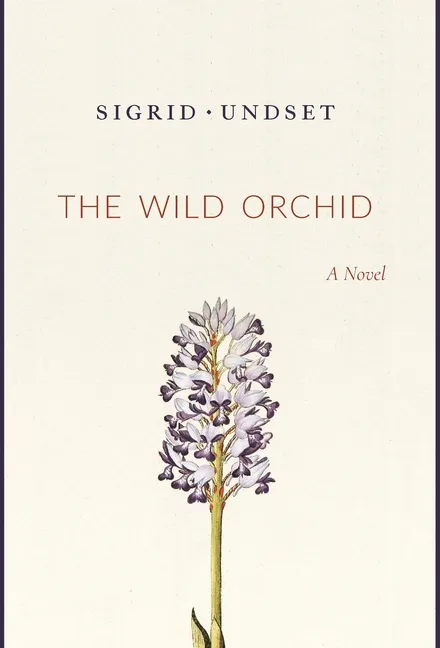
"The Wild Orchid" is a profound exploration of one man's spiritual and intellectual awakening amidst the shifting cultural landscape of early twentieth-century Norway. Written by Nobel Prize laureate Sigrid Undset, the novel follows Paul Selmer, a young man raised in a progressive, secular household. As he navigates the complexities of adulthood, romance, and professional life, Paul finds himself increasingly dissatisfied with the liberal rationalism of his upbringing. His search for a deeper truth leads him toward the ancient traditions of the Catholic faith, setting the stage for a dramatic conflict between his modern surroundings and his burgeoning religious convictions.
Undset's masterful narrative combines a meticulous depiction of Norwegian society with a sensitive portrayal of the internal struggles that define the human condition. Through the character of Paul, the author examines themes of morality, family responsibility, and the search for absolute meaning in an age of uncertainty. "The Wild Orchid" serves as a compelling introduction to Undset's later works, offering a rich, multi-layered story that remains a significant contribution to world literature and Christian fiction. This work stands as a testament to the author's ability to weave profound theological questions into the fabric of a vivid, realistic saga.
This work has been selected by scholars as being culturally important, and is part of the knowledge base of civilization as we know it. This work was reproduced from the original artifact, and remains as true to the original work as possible. Therefore, you may see the original copyright references, library stamps (as most of these works have been housed in our most important libraries around the world), and other notations in the work.
This work is in the public domain in the United States of America, and possibly other nations. Within the United States, you may freely copy and distribute this work, as no entity (individual or corporate) has a copyright on the body of the work.
As a reproduction of a historical artifact, this work may contain missing or blurred pages, poor pictures, errant marks, etc. Scholars believe, and we concur, that this work is important enough to be preserved, reproduced, and made generally available to the public. We appreciate your support of the preservation process, and thank you for being an important part of keeping this knowledge alive and relevant.
Sigrid Undset
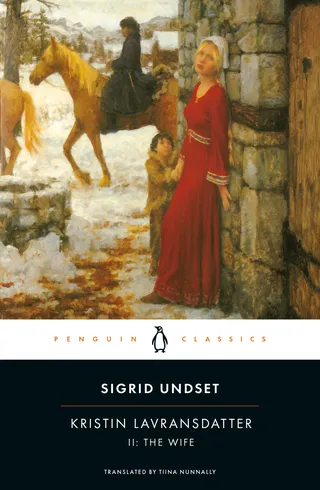
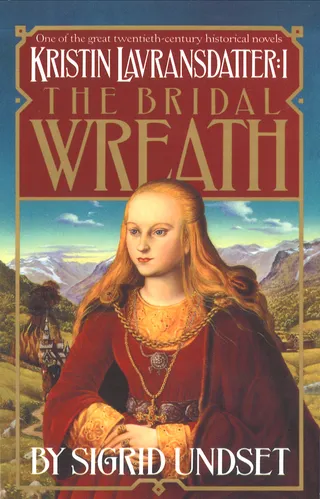
Sigrid Undset (1882-1949), Norwegian novelist, essayist, and Catholic convert, was born in Denmark, the eldest daughter of a Norwegian father and a Danish mother. She converted to Catholicism in 1924 and became a lay Dominican. Undset's many published works include the novels Mrs. Marta Oulie, The Happy Age, Gunnar's Daughter, and Kristin Lavransdatter, her most famous work. In 1928, she received the Nobel Prize for Literature, becoming the third woman to be so honored.
Undset was an outspoken critic of Nazism and fled to Brooklyn, New York, upon the German occupation of Norway. She returned to her homeland in 1945 and two years later was awarded Norway's highest honor, the Grand Cross of the Order of Saint Olav, for her "distinguished literary work and for service to her country."
More by Sigrid Undset


Why Readwise Books?
Readwise Books is an ebook & audiobook platform that automatically logs how much you and your friends read, making it fun and easy to read more. Learn more →