Report an issue
Tell us what's wrong and we'll take a look.
Thanks – we got it. We'll review and follow up if needed.
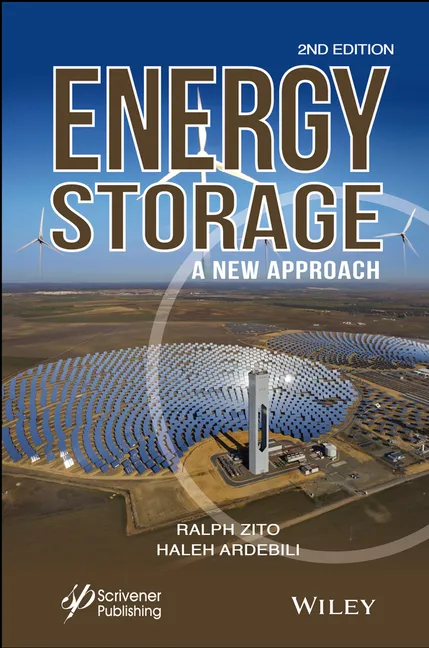
This new revision of an instant classic presents practical solutions to the problem of energy storage on a massive scale. This problem is especially difficult for renewable energy technologies, such as wind and solar power, that, currently, can only be utilized while the wind is blowing or while the sun is shining. If energy storage on a large scale were possible, this would solve many of our society’s problems. For example, power grids would not go down during peak usage. Power plants that run on natural gas, for example, would no longer burn natural gas during the off-hours, as what happens now. These are just two of society’s huge problems that could be solved with this new technology.
This new edition includes additional discussion and new sections on energy problem including increasing population and greenhouse effects, and an expanded overview of energy storage types. Chapter two has been expanded to provide further discussion of the fundamentals of energy and new sections on elastic, electrical, chemical, and thermal energy. Two new chapters have been added that provide a discussion of electrolytes and membranes and on flexible and stretchable energy storage devices. A new section has also been added on the future of energy storage in the final chapter.
This is a potentially revolutionary book insofar as technical books can be “revolutionary.” The technologies that are described have their roots in basic chemistry that engineers have been practicing for years, but this is all new material that could revolutionize the energy industry. Whether the power is generated from oil, natural gas, coal, solar, wind, or any of the other emerging sources, energy storage is something that the industry must learn and practice. With the world energy demand increasing, mostly due to the industrial growth in China and India, and with the West becoming increasingly more interested in fuel efficiency and “green” endeavors, energy storage is potentially a key technology in our energy future.
Haleh Ardebili
Dr. Haleh Ardebili has a BS honors degree in Engineering Science and Mechanics from Pennsylvania State University at University Park, MS degree in Mechanical Engineering from Johns Hopkins University and PhD degree in Mechanical Engineering from University of Maryland at College Park. She has three years of industry experience as research scientist at General Electric Global Research Center at Niskayuna, New York. She is a recipient of GE Invention Fulcrum of Progress Award. She has several years of experience teaching engineering courses at University of Houston. In Sep 2010, she joined as Assistant Professor in the Mechanical Engineering Department at University of Houston. Her research work is mainly focused on nanomaterials for Energy Storage and Electronics.
More by Haleh Ardebili


Why Readwise Books?
Readwise Books is an ebook & audiobook platform that automatically logs how much you and your friends read, making it fun and easy to read more. Learn more →