
Exorcism
Report an issue
Tell us what's wrong and we'll take a look.
Thanks – we got it. We'll review and follow up if needed.
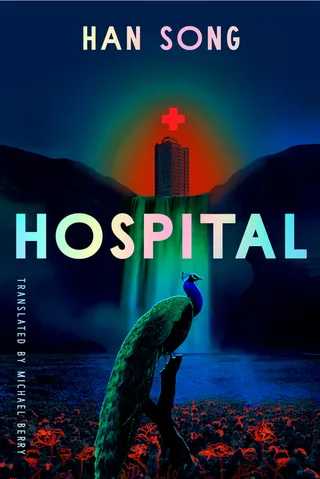
In the follow-up to the visionary Hospital, Yang Wei discovers that there's more to the mysterious hospital than meets the eye--and none of it is as it seems.
Yang Wei wakes to find himself still a patient at the hospital. Somehow, he's aged decades overnight and is confined to the geriatric ward on a massive Hospital ship as it floats along a bloodred sea full of unsightly things. But human remains and sea nymphs are perhaps nothing compared to the goings-on belowdecks.
The doctors are nowhere to be found, replaced by a procession of medical robots from whom, of course, no information can be gleaned. So Yang Wei, along with a small group of patients--all just as aged as he is--venture out to explore the uncharted depths of the ship and the answers that are surely hidden within.
As they delve deeper into both the ship and why they're on it, every uncovered secret comes with its own questions. The only thing Yang Wei can be sure of is that the more he learns, the less he understands...and the less he truly wants to know.
(c) 2017, 2023 by Han Song, all rights reserved. Translation (c) 2023 by Michael Berry.
Han Song
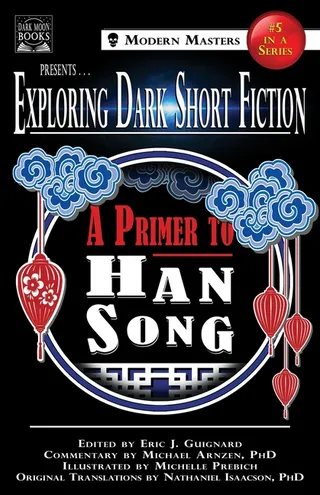
Han Song is a journalist with Xinhua News Agency and one of China's leading science fiction writers. A native of Chongqing, Han earned an MA in journalism from Wuhan University; he began writing in 1982 and has published numerous volumes of fiction and essays. His novels include The Red Sea, Red Star over America, the Rails trilogy (Subway, High-Speed Rail, and Orbits), and the Hospital trilogy (Hospital, Exorcism, and Dead Souls), which has been described as a new landmark in dystopian fiction. Han is a six-time winner of the Chinese Galaxy Award for fiction and a repeat recipient of the Xingyun Award. His short fiction has appeared in the collections Broken Stars and The Reincarnated Giant and the anthology Exploring Dark Short Fiction: A Primer to Han Song. He is also an avid reader and traveler, having spent time in the Antarctic and the Arctic. He's even searched for bigfoot in the forests of central China.
More by Han Song



Michael Berry
Translated by
Michael Berry is Professor of Contemporary Chinese Cultural Studies and Director of the Center for Chinese Studies at UCLA. He is the author of several books on Chinese film and culture, including Speaking in Images and A History of Pain. He has served as a film consultant and a juror for numerous film festivals, including the Golden Horse (Taiwan) and the Fresh Wave (Hong Kong). He is also the translator of several novels, including To Live, The Song of Everlasting Sorrow, and Remains of Life.


Why Readwise Books?
Readwise Books is an ebook & audiobook platform that automatically logs how much you and your friends read, making it fun and easy to read more. Learn more →