
Imaginary Lives
Report an issue
Tell us what's wrong and we'll take a look.
Thanks – we got it. We'll review and follow up if needed.

“The art of the biographer consists specifically in choice. He is not meant to worry about speaking truth; he must create human characteristics amidst the chaos.”—Marcel Schwob
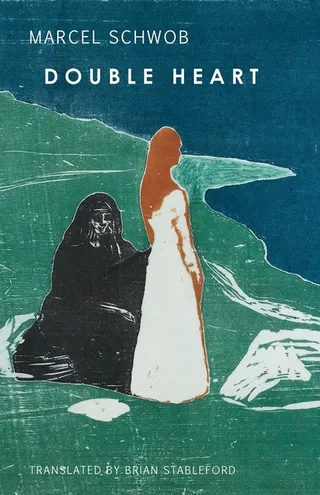
Imaginary Lives remains, over 120 years since its original publication in French, one of the secret keys to modern literature: under-recognized, yet a decisive influence on such writers as Apollinaire, Borges, Jarry and Artaud, and more contemporary authors such as Roberto Bolaño and Jean Echenoz. Drawing from historical influences such as Plutarch and Diogenes Laërtius, and authors more contemporary to him such as Thomas De Quincey and Walter Pater, Schwob established the genre of fictional biography with this collection: a form of narrative that championed the specificity of the individual over the generality of history, and the memorable detail of a vice over the forgettable banality of a virtue.
These 22 portraits present figures drawn from the margins of history, from Empedocles the “Supposed God” and Clodia the “Licentious Matron” to the pirate Captain Kidd and the Scottish murderers Messrs. Burke and Hare. In his quest for unique lives, Schwob also formulated an early conception of the anti-hero, and discarded historical figures in favor of their shadows. These “imaginary lives” thus acquaint us with the “Hateful Poet” Cecco Angiolieri instead of his lifelong rival, Dante Alighieri; the would-be romantic pirate Major Stede Bonnet instead of the infamous Blackbeard who would lead him to the gallows; the false confessor Nicolas Loyseleur rather than Joan of Arc whom he cruelly deceived; or the actor Gabriel Spenser in place of the better-remembered Ben Jonson who ran a sword through his lung.
Marcel Schwob (1867–1905) was a scholar of startling breadth and an incomparable storyteller. The secret influence on generations of writers, Schwob was as versed in the street slang of medieval thieves as he was in the poetry of Walt Whitman (whom he translated into French).

Chris Clarke
Translated by
Chris Clarke is Reader in Political Economy at the University of Warwick. He is the author of Ethics and Economic Governance: Using Adam Smith to Understand the Global Financial Crisis.


Why Readwise Books?
Readwise Books is an ebook & audiobook platform that automatically logs how much you and your friends read, making it fun and easy to read more. Learn more →