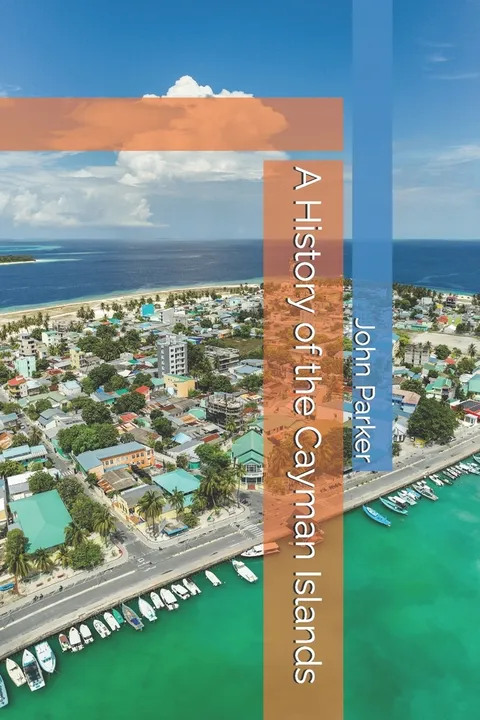
A History of the Cayman Islands
Report an issue
Tell us what's wrong and we'll take a look.
Thanks – we got it. We'll review and follow up if needed.
From a remote maritime frontier to a global economic powerhouse, this is the sweeping story of the Cayman Islands. The narrative begins with the geological birth of three small limestone islands and their first encounter with the Old World, when Christopher Columbus sighted them and named them "Las Tortugas" for the teeming sea turtles in their waters. For centuries, these islands remained a footnote in the grand sagas of empire, an ungoverned sanctuary for pirates, privateers, and shipwrecked sailors, their treacherous reefs and secluded coves a perfect haven on the fringes of the Spanish Main.
The book chronicles the formation of a unique and resilient society, forged by the sea and defined by hardship. It details the arrival of the first permanent settlers-deserters and refugees-and the subsequent introduction of enslaved Africans, whose labor and legacy would fundamentally shape the nation's demographics and culture. Readers will journey through the age of turtling schooners, when Caymanian seamen became renowned for their skill, venturing far from home on perilous voyages that sustained their families and created a profoundly independent, matrifocal society whose motto would forever be "He hath founded it upon the seas."
A pivotal turning point in the islands' history is explored in depth: the momentous decision in 1962. As Jamaica, the nation to which Cayman was a dependency, chose independence, the Cayman Islands opted for a different path, choosing to remain a British Crown Colony. This single act set the stage for a staggering transformation. The book meticulously documents the quiet, strategic work of the decades that followed, as a new generation of leaders laid the legislative groundwork for the "twin pillars" of the modern economy: international finance and upscale tourism.
The narrative brings the story into the modern era, detailing the explosive growth that turned a quiet archipelago into a sophisticated global financial hub and a premier travel destination. This rapid development, however, brought new and complex challenges. The book examines the front-line environmental battles to save the coral reefs and the iconic Blue Iguana, the devastating impact and resilient recovery from 2004's Hurricane Ivan, and the constant pressure of global regulatory scrutiny on the financial industry. It also delves into the profound social changes brought by mass migration, which transformed a small, homogenous community into a vibrant multicultural society.
John Parker
John Parker is an author, entrepreneur and military veteran from England whose debut children's book, Little Bird Saves Christmas, celebrates the difference even the smallest among us can make. John served with the Grenadier Guards from 2005 to 2014, completing two tours in Afghanistan. He later worked as a close protection officer across the UK and in West Africa. Having witnessed division and separation in different parts of the world, he wanted to create a story that encourages children to recognise their own worth and the value of helping others. His love of poetry began at a young age. Through the playful rhyme of Little Bird Saves Christmas, published in autumn 2026 as the first in a planned children's series, John hopes to introduce young readers to the joy of poetry while sharing a message of kindness, courage and belonging. Alongside writing, John owns a fashion brand and is a director of a UK textiles manufacturing company. He is married, with an eighteen-year-old son and a seven-year-old stepdaughter. Away from work, he enjoys reading, writing poetry, keeping fit and developing his businesses.
More by John Parker











Why Readwise Books?
Readwise Books is an ebook & audiobook platform that automatically logs how much you and your friends read, making it fun and easy to read more. Learn more →