Report an issue
Tell us what's wrong and we'll take a look.
Thanks – we got it. We'll review and follow up if needed.
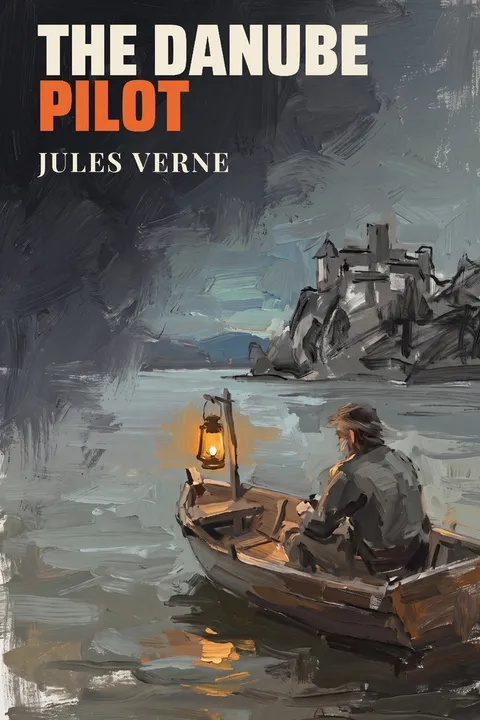
Serge Ladko, prize winner in the Danubian League of Amateur Fishermen, sets out to navigate the entire length of Europe's second-longest river-from Germany through the heart of the fragmenting Austro-Hungarian Empire to the Black Sea delta. His mission: demonstrate his piloting expertise and investigate mysterious incidents plaguing the Danube's communities.
But this journey comes with a complication readers should understand from the outset.
The Danube Pilot appeared in 1908, three years after Jules Verne's death, published by his son Michel who extensively revised-some would say rewrote-his father's manuscripts. What we encounter here isn't pure Jules Verne but something more ambiguous: the elder Verne's ideas filtered through his son's editorial vision, a collaboration neither would have chosen.
Scholars have spent decades trying to determine where Jules ends and Michel begins. The original title was "Le Beau Danube Jaune" ("The Beautiful Yellow Danube"), characteristically ironic wordplay against Strauss's famous waltz. Michel changed it to the blander Pilote du Danube, eliminating the joke-a small alteration that suggests his broader editorial approach.
The Danube setting remains authentic regardless of authorial complications. The novel captures a specific waterway at a specific moment: early twentieth-century Central Europe, the river connecting territories about to splinter into hostile nations, communities linked by water but divided by language, ethnicity, empire. Whether Jules researched these details or Michel added them from contemporary sources, they preserve a portrait of a vanished world.
What emerges is part river adventure, part mystery, part travelogue through regions less familiar to Western readers than Paris or London. Serge's journey reveals the Danube's human ecosystem: fishermen, merchants, aristocrats, criminals, each shaped by their relationship to the river. The investigation framework allows systematic exploration of geography and culture while maintaining narrative momentum.
Reading the posthumous Verne novels requires acknowledging textual uncertainty. We don't know which passages represent Jules's work and which Michel's additions. But that ambiguity doesn't make the text worthless-it's a historical document revealing how the early twentieth century understood river travel, Eastern European geography, and adventure narrative, even if "Jules Verne" on the title page represents a complicated claim.
For readers interested in the Danube, in textual history's complexities, or in how popular literature was commercially shaped in the early 1900s, The Danube Pilot offers something genuinely unusual: a novel that matters as much for what we don't know about it as what we do.
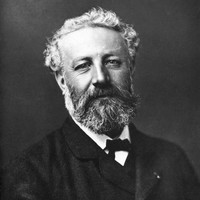
Jules Verne
Jules Verne (1828-1905) is considered by many the father of science fiction. Born in Nantes, France, he studied law but turned to writing opera libretti until the 1863 publication of Five Weeks in a Balloon, the first of his Extraordinary Voyages series. Its success encouraged him to produce a number of classic and prophetic science fiction novels, including Journey to the Center of the Earth and Twenty Thousand Leagues under the Sea. His stories foresaw many scientific and technological developments, including the submarine, television, and space travel.
More by Jules Verne








Why Readwise Books?
Readwise Books is an ebook & audiobook platform that automatically logs how much you and your friends read, making it fun and easy to read more. Learn more →