Report an issue
Tell us what's wrong and we'll take a look.
Thanks – we got it. We'll review and follow up if needed.
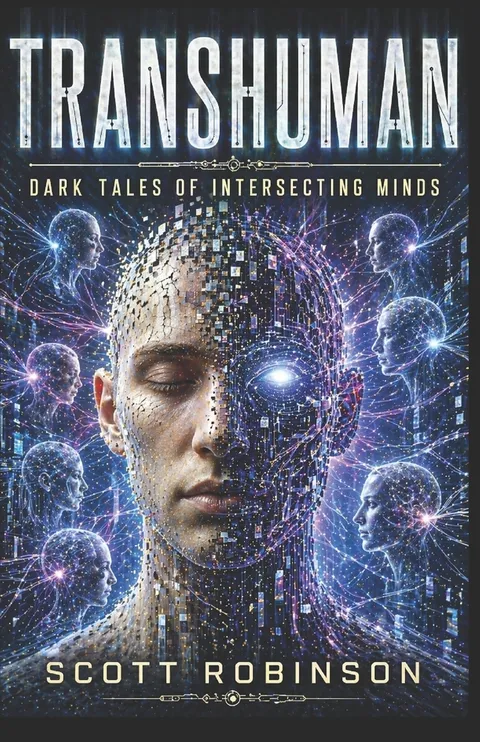
When I started writing, I didn't hesitate to introduce AI and robots into my own work - and beyond the writing, into my career as a technologist. Those two sides of my life intertwined relentlessly, each informing the other.
This new collection is largely built on Silicon Sonatas, a broader compendium of my AI/robot stuff - but this time out, the theme is more about the interaction between human and digital minds. Some draw inspiration from AI progress in the real world.
The concept of machine learning, for instance - how AI systems train to perform intelligent work by ingesting vast amounts of data, then deep-searching that data for meaningful patterns - pervades several of these tales. In "Peacekeeper", a robot police officer learns to model the behavior of a good citizen by closely observing good citizens; the superintelligence Medallion, featured in two of these tales ("And Now, the News", "Medallion"), ingests the entire Internet in order to learn all there is to know about humanity.
The line between human and android is explored in "The Only", in which the last human psychologist is tasked with studying the behavior of the last android, and finds the lines disturbingly blurred; in "When I Waked, I Cried to Dream Again", three human engineers have downloaded their minds into android bodies to survive a centuries-long starflight, and learn hard truths about how human trauma plays in android circuits.
The question of whether a human mind can live in a digital brain at all is the theme of "Download", a story modeled on Asimov's history-of-robots frame; and "Mandarin's Redux" explores the human subconscious through the lens of role-playing games - in a bid to discover a world-saving password via the creativity of three military AIs.
And finally, a tabula rosa worker robot, lost in the Northwestern countryside, meets up with a lonely autistic child - and the two contrive a unique shared intelligence between them, in "Song of Aveyron".
What's exciting about all this, today, is how far we've come in the decades since these questions first began to fascinate me: we are on the cusp of beginning to answer them.
Scott Robinson
Scott Robinson is a former associate professor of music at Eastern University and has written for Sojourners, the Philadelphia Inquirer, and Forward Day by Day. He is the author of The Dark Hills (2015).
More by Scott Robinson



Why Readwise Books?
Readwise Books is an ebook & audiobook platform that automatically logs how much you and your friends read, making it fun and easy to read more. Learn more →