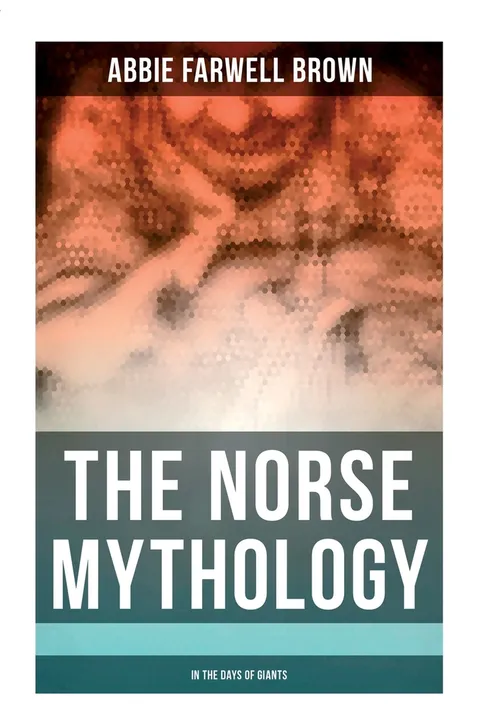
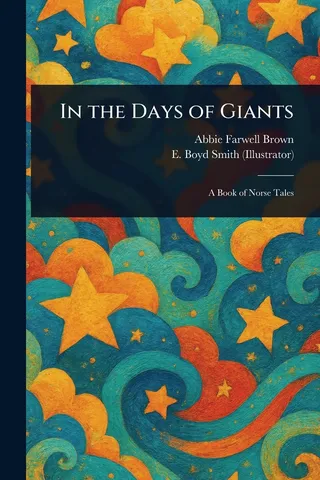
The Norse Mythology: In the Days of Giants
The Beginning of Things, How Odin Lost His Eye, Loki's Children, Thor's Duel, in the Giant's House, the Punishment of Loki
Report an issue
Tell us what's wrong and we'll take a look.
Thanks – we got it. We'll review and follow up if needed.
In "The Norse Mythology: In the Days of Giants," Abbie Farwell Brown deftly narrates the enchanting tales of the Norse pantheon, artfully weaving the mythology of ancient Scandinavia into a vibrant tapestry of awe and wonder. Through her engaging prose, Brown reflects the oral storytelling tradition, interspersing poetic elements with a straightforward narrative that invites readers of all ages to explore the majestic world of gods, giants, and fantastical creatures. The book's structure mirrors the cyclical nature of myth, resonating deeply with the themes of fate, heroism, and the eternal struggle between light and darkness that are central to Norse lore. Abbie Farwell Brown was an accomplished writer and a pioneering figure in children's literature in the early 20th century. Her background in both literature and folklore significantly influenced her work, allowing her to distill complex myths into accessible narratives for younger audiences. Brown's passion for storytelling, combined with her interest in preserving cultural heritage, propelled her to delve deeply into the rich tapestry of Norse myths, making them approachable for a contemporary readership. This book is highly recommended for anyone intrigued by mythology, particularly those seeking to deepen their understanding of Norse culture and its enduring impact on modern storytelling. With its captivating storytelling and beautifully crafted themes, Brown's work will captivate both young readers and adults alike, fostering a profound appreciation for the ancient narratives that have shaped our collective imagination.
Abbie Farwell Brown
Abbie Farwell Brown was an American writer. Brown was born in Boston, Massachusetts, as the first of two daughters of Benjamin F. Brown, an Isaac Allerton descendent, and Clara Neal Brown, a contributor to The Youth's Companion. Her sister, Ethel, became an author and illustrator under the name Ann Underhill. Brown's family had lived in New England for ten generations, and she had spent her whole life in her Beacon Hill mansion. Brown was the Bowdoin School's valedictorian in 1886. She later attended the Girls' Latin School, where she became acquainted with Josephine Preston Peabody. She was the main force behind the newly founded school newspaper, The Jabberwock, which Brown called after Lewis Carroll's poem. While at Girls' Latin School, she contributed to St. Nicholas Magazine, some of which were illustrated by her sister. She began writing for the St. Louis Globe-Democrat under the pen name Jean Neal in 1898. She also created a one-act comedy, Quits (1896), set in a women's college. Saint Werburgh's miracles, including the resuscitation of a goose, from Chester Cathedral Her first children's book, The Book of Saints and Friendly Beasts (1900), was inspired by her first journey abroad, notably the carved choir stalls in Chester Cathedral that depict the life of Saint Werburgh. The book retells Christian stories about saints' contacts with animals. Brown would publish further collections retelling old tales for a modern child readership.
More by Abbie Farwell Brown


Why Readwise Books?
Readwise Books is an ebook & audiobook platform that automatically logs how much you and your friends read, making it fun and easy to read more. Learn more →