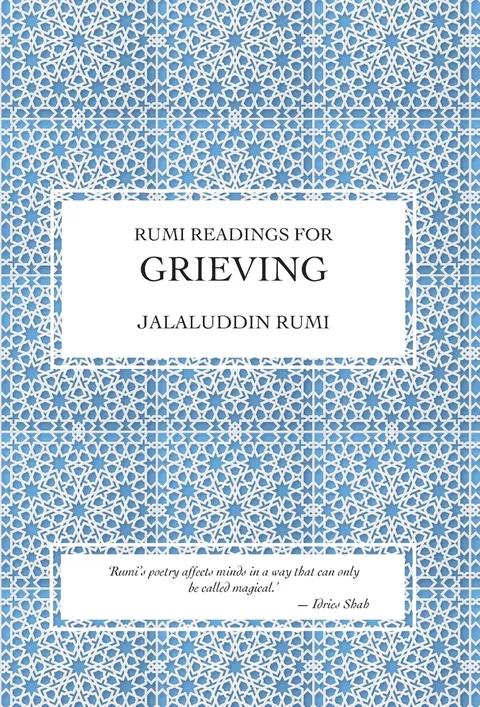
Rumi Readings for Grieving
Report an issue
Tell us what's wrong and we'll take a look.
Thanks – we got it. We'll review and follow up if needed.
In recent years, the Western world has been flooded with all things 'Rumi'.
Verses ascribed to the great thirteenth-century Sufi mystic are read at weddings, births, and funerals across the United States, Europe, and beyond.
Wisdom drawn from Rumi's work is tattooed over the limbs and backs of Hollywood A-listers, and ordinary folk as well.
And, yet, the precious lines uttered at ceremonies, etched onto skin, and quoted elsewhere in such abundance bear only a passing resemblance to the original masterful poetry penned by Jalaluddin Rumi.
This is because the West's fascination with these poems, written some seven centuries ago, largely stems from translations by individuals who, though often impressive poets themselves, have little or no understanding of the original Persian.
At the Scheherazade Foundation, we believe that Occidental society can benefit enormously from Rumi's clarity and wisdom, and that his body of work is as important now as it has ever been.
For this reason, we have commissioned native Persian-speaking scholars to craft entirely new translations, taking every care to remain faithful to Rumi's own words.
And so as to allow Rumi's wisdom to be absorbed with ease, the readings are presented in their essential form, and are arranged by theme.
Rumi
Rumi--Jalal ad-Din Muhammad Balkhi, also known as Jalal ad-Din Muhammad Rumi or simply as Rumi--(September 30, 1207-December 17, 1273) was a thirteenth-century Persian poet, theologian, and Sufi mystic. His poetry is revered around the world. He is currently considered to be one of the most popular poets in America. His words of wisdom and spirituality are just as pertinent now as they were in his time.
More by Rumi





Why Readwise Books?
Readwise Books is an ebook & audiobook platform that automatically logs how much you and your friends read, making it fun and easy to read more. Learn more →