Report an issue
Tell us what's wrong and we'll take a look.
Thanks – we got it. We'll review and follow up if needed.
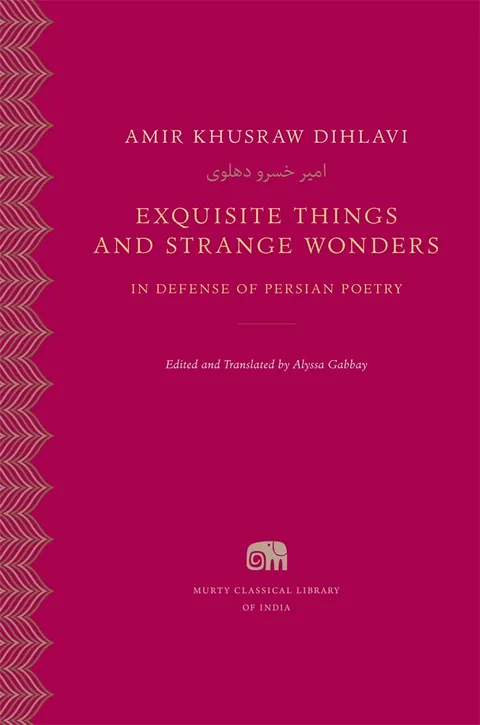
A defense of poetry from a towering figure of the medieval Persianate world.
Written in 1294 as the introduction to a book of poetry, the Dībācha-yi dīvān-i ghurrat al-kamāl became a lauded work in its own right. Its author, Amir Khusraw Dihlavi (1253-1325), was a poet, historian, courtier, Sufi, and musician whose influence still resonates. In this extraordinary text, he defends poetry against its critics, especially religious scholars, while offering a bold system for understanding its forms and for mastering the art. Blending manifesto and autobiography, Khusraw recounts personal struggles and triumphs in a voice by turns aggrieved, proud, and humble yet always commanding.
More than a defense of poetry, the work makes audacious claims about its cultural power and about the central place of Persian poets in India. One of the earliest examples of literary criticism in Persian, it challenges assumptions about poetry, religion, and authority while opening a window onto the world of the Delhi Sultanate. Presented here in a new English translation with the Persian text in the Naskh script, Exquisite Things and Strange Wonders offers readers a vivid portrait of a poet who helped define the literary and intellectual landscape of his time.
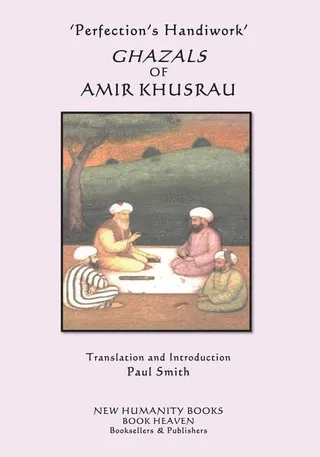
Amir Khusraw Dihlavi
Amir Khusraw Dihlavi was born in 1253 in Patiyali, Kasganj district, in what is now Uttar Pradesh, India. At the time, it was part of the Delhi Sultanate. His father was of Turkic descent, and his mother, Bibi Daulat Naz, was from India. There was a Sunni Muslim named Amir Saif ud-Din Mahmud. He grew up in the small town of Kesh, which is near Samarkand in what is now Uzbekistan. When he was young, Genghis Khan's invasion of Central Asia had ruined and destroyed the area. Many people moved to other countries, with India being a popular choice. A group of families, including Amir Saif ud-Din's, left Kesh and went to Balkh, which is now in northern Afghanistan and was a relatively safe place. From there, they sent messengers to the Sultan of faraway Delhi to ask for safety and help. This was okayed, and the group then went to Delhi. Sultan Shams ud-Din Iltutmish, who was in charge of Delhi, was also Turkic, just like them. He had grown up in the same part of Central Asia and had been through some similar things in his past. That's why they came to him in the first place. Iltutmish not only let the refugees stay at his court, but he also gave some of them high positions and land. Amir Saif ud-Din was given a fief in the Patiyali area in 1230.
More by Amir Khusraw Dihlavi


Alyssa Gabbay
Translated by
Alyssa Gabbay is Associate Professor Emerita at the University of North Carolina at Greensboro.












Why Readwise Books?
Readwise Books is an ebook & audiobook platform that automatically logs how much you and your friends read, making it fun and easy to read more. Learn more →