Report an issue
Tell us what's wrong and we'll take a look.
Thanks – we got it. We'll review and follow up if needed.
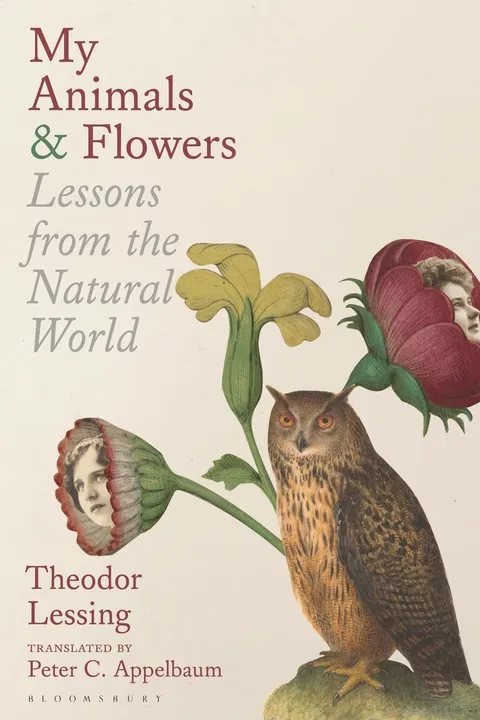
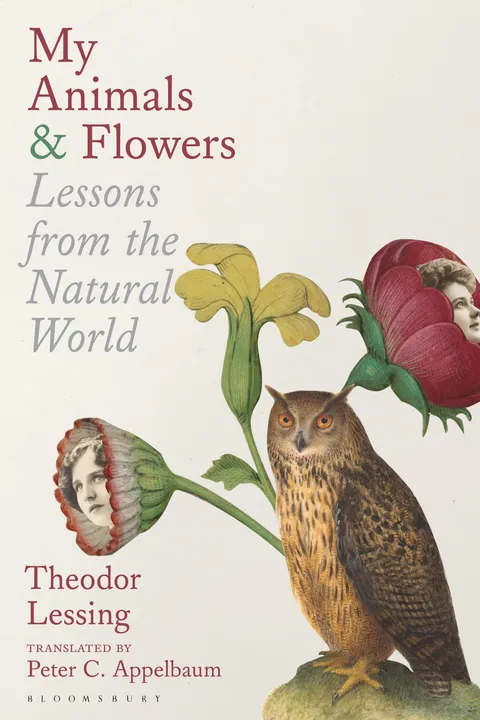
Translated into English for the first time, My Animals and Flowers bring forth Theodor Lessing's visionary philosophy of need in an idiosyncratic series of musings on the natural world, which range from light-hearted to darkly shadowed. Full of imagination, wit, and insight into the nature and history of living species, they demonstrate Lessing's brilliant ability to combine biological observation with social, psychological, political, historical, educational, and above all, philosophical thoughts.
Grimly pessimistic about human society, Lessing found both a mirror and a refuge in the world of animals and flowers. In observing nature and attributing all type of human characteristics to animals and plants, he exposes the fusing of nature and culture, and – in dialogue with the natural world – confronts a whole cluster of political questions from the question of equality for women and marital fidelity to the pollution of cities and man's destruction of the environment. Much of this work, sketching out the implications of an atomic age for example, has proved uncannily prophetic.
To read this book is to enter into a curious and deeply sensitive world, in which to peer down at a colony of ants is to be reminded of 'giant nations, each in conflict with the others', and to catch a glimpse of bright poppies in a cornfield is to be submerged in a chain of thoughts from St Augustine to David Hume. Amongst the autobiographical reflections, Lessing weaves in critical observations of Western civilization, and critique of human culture as a destructive and disfiguring influence in the natural world. Ultimately, his philosophy of need shows how civilization comes at the expense of nature, ringing true with the climate of our times.
Theodor Lessing
Theodor Lessing was a German-Jewish philosopher. He taught at Hanover Technical College until right-wing student protests forced him to leave in 1926, after which he worked as an independent scholar and journalist. He was assassinated in 1933 by two National Socialists.
More by Theodor Lessing
Peter C Appelbaum
Translated by
Peter C. Appelbaum is Emeritus Professor of Pathology at Pennsylvania State University. During his retirement years he has produced sixteen books and translations, including six translations from the original Hebrew. He was awarded the (London) Times Literary Supplement - Risa Domb Porjes Prize in 2019 for his translation of Avigdor Hameiri's Hell on Earth.


Why Readwise Books?
Readwise Books is an ebook & audiobook platform that automatically logs how much you and your friends read, making it fun and easy to read more. Learn more →