Report an issue
Tell us what's wrong and we'll take a look.
Thanks – we got it. We'll review and follow up if needed.
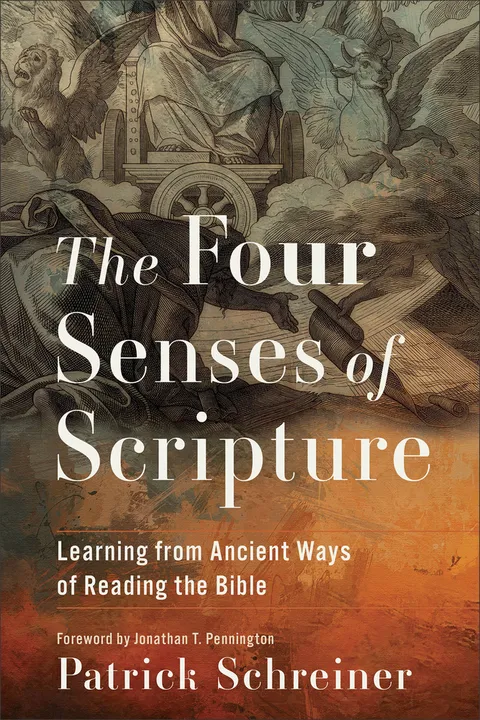
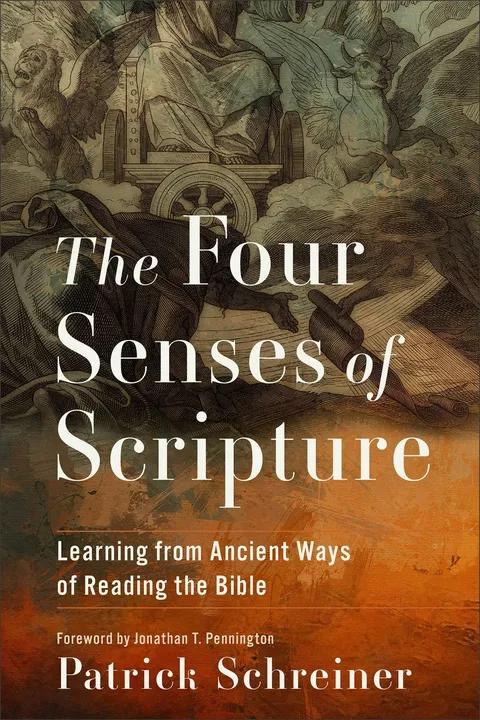
Recovering the Church's Classical Approach to Biblical Interpretation
For nearly 1,700 years, the church read Scripture through four interwoven lenses--literal, allegorical, tropological, and anagogical--known as the quadriga. Modern biblical hermeneutics has largely set this tradition aside. In The Four Senses of Scripture, Patrick Schreiner argues the church hasn't moved beyond the ancient approach so much as it has lost something essential.
Schreiner doesn't reject the grammatical-historical method--he recovers what it leaves behind. This book
● covers all four senses--literal (grammatical-historical), allegorical (Christological), tropological (moral), and anagogical (eschatological)--with the what, why, and how of each;
● traces why early Christians used this method and makes the case for recovering a medieval mind for modern readers;
● demonstrates each sense in practice with examples drawn from across the biblical canon;
● engages exegetical, historical, and allegorical critiques of the quadriga with scholarly rigor; and
● includes an appendix written specifically for church application with scholars, students, and pastors in mind.
Drawing on patristic and medieval exegesis, Schreiner offers a coherent, historically grounded framework for reading Scripture through all four senses in conversation, a method that better honors the nature, goal, and ecclesial context of biblical interpretation. The book includes a foreword by Jonathan T. Pennington.
Patrick Schreiner
Patrick Schreiner (PhD, Southern Baptist Theological Seminary) is associate professor of New Testament and biblical theology at Midwestern Baptist Theological Seminary. He is the author of several books, including The Transfiguration of Christ, Matthew, Disciple and Scribe, and The Kingdom of God and the Glory of the Cross.
More by Patrick Schreiner






Why Readwise Books?
Readwise Books is an ebook & audiobook platform that automatically logs how much you and your friends read, making it fun and easy to read more. Learn more →