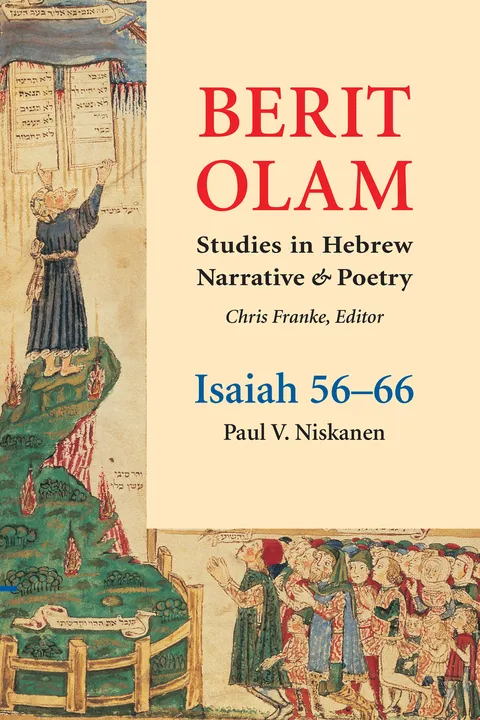
Berit Olam: Isaiah 56-66
Audiobook
Unavailable
Paperback
Unavailable
Hardback
Unavailable
Liturgical Press
ISBN 9780814682562
Report issue
Report an issue
Tell us what's wrong and we'll take a look.
Thanks – we got it. We'll review and follow up if needed.
The last chapters of the book of Isaiah offer a vision of new hope at the dawn of the postexilic period. The dense and complex imagery of light, espousal, and victory gives expression to the joyful reality of a return to Jerusalem and to the as-yet-unrealized dreams of rebuilding and repopulating what has been laid to waste.
Trito-Isaiah's proclamation of God's salvation or victory appears both as a brilliant light and a terrible darkness in these chapters. For while Yahweh's triumph means rejoicing for his righteous servants, it portends unspeakable horror for those who rebel against him.
Far from a remotely related appendix tacked on to the prophetic text, Niskanen examines Isaiah 56–66 within the broader context of the entire book of Isaiah, revealing the stylistic and thematic connections between these and earlier chapters and the significance of the poetical structures and imagery employed in Isaiah 56–66.
Paul V. Niskanen
Paul Niskanen is Assistant Professor of Old Testament at the University of St. Thomas, St. Paul, Minnesota.
More by Paul V. Niskanen


Why Readwise Books?
Readwise Books is an ebook & audiobook platform that automatically logs how much you and your friends read, making it fun and easy to read more. Learn more →