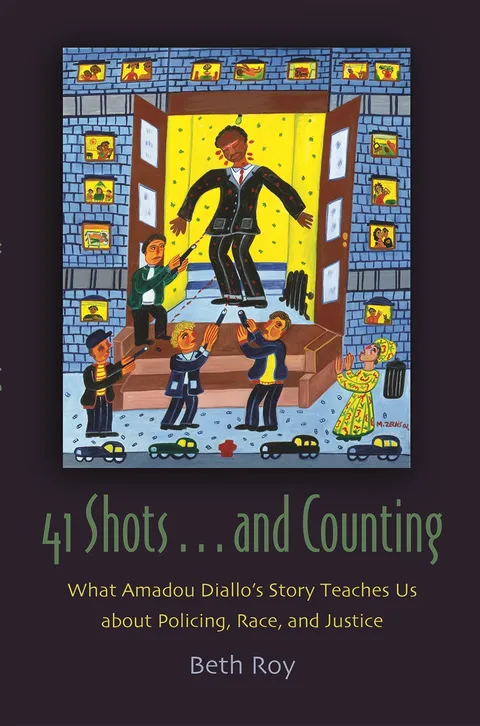
41 Shots . . . and Counting
What Amadou Diallo’s Story Teaches Us about Policing, Race, and Justice
Report an issue
Tell us what's wrong and we'll take a look.
Thanks – we got it. We'll review and follow up if needed.
When four New York City police officers killed Amadou Diallo in 1999, the forty-one shots they fired echoed loudly across the nation. In death, Diallo joined a long list of young men of color killed by police fire in cities and towns all across America. Through innuendos of criminality, many of these victims could be discredited and, by implication, held responsible for their own deaths. But Diallo was an innocent, a young West African immigrant doing nothing more suspicious than returning home to his Bronx apartment after working hard all day in the city. Protesters took to the streets, successfully demanding that the four white officers be brought to trial. When the officers were acquitted, however, horrified onlookers of all races and ethnicities despaired of justice.
In 41 Shots . . . and Counting, Beth Roy offers an oral history of Diallo’s death. Through interviews with members of the community, with police officers and lawyers, with government officials and mothers of young men in jeopardy, the book traces the political and racial dynamics that placed the officers outside Diallo’s house that night, their fingers on symbolic as well as actual triggers. With lucid analysis, Roy explores events in the courtroom, in city hall, in the streets, and in the police precinct, revealing the interlacing conflict dynamics. 41 Shots . . . and Counting allows the reader to consider the implications of the Diallo case for our national discourses on politics, race, class, crime, and social justice.


Why Readwise Books?
Readwise Books is an ebook & audiobook platform that automatically logs how much you and your friends read, making it fun and easy to read more. Learn more →