Report an issue
Tell us what's wrong and we'll take a look.
Thanks – we got it. We'll review and follow up if needed.
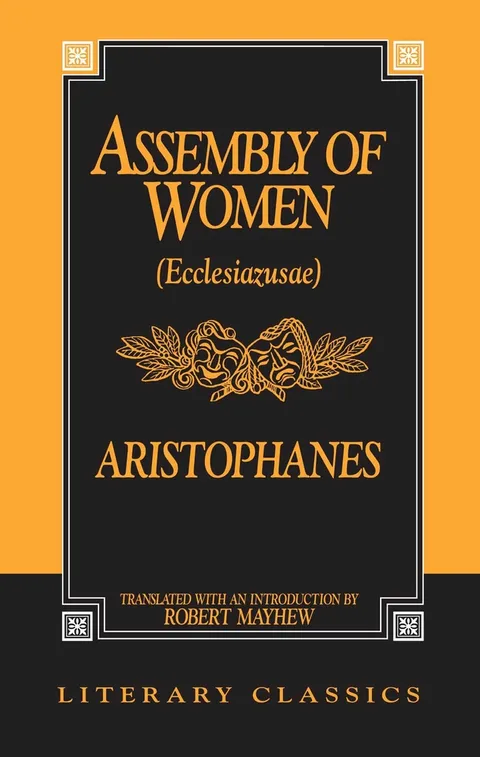
The women of Athens concoct a daring scheme: penetrate the male-dominated Assembly disguised as men and vote themselves into power, after which they will overturn the old laws and inaugurate a new society where all are equal and where property and sex, too! is shared. This new translation of Aristophanes' last extant play recaptures the spirit, the bawdiness, and the brilliance of this rollicking farce, which is at the same time a profound critique of contemporary Greek customs and manners.
Aristophanes
Aristophanes was a Greek comic playwright who lived from 446 to 386 BC. He was born in Athens and little is known about his early life. He began writing plays in the late 5th century BC and went on to become one of the most famous and celebrated writers of his time. Aristophanes wrote more than 40 plays. His plays were performed at the Dionysia, a festival held in honor of the god of wine and theater, and were known for their political satire and social commentary. Aristophanes' plays often mocked the political and cultural institutions of Athens, including its leaders and philosophers. He was a vocal critic of the Peloponnesian War, which he believed was damaging Athens and its people. His plays were also notable for their use of bawdy humor and wordplay. Despite his satirical tone, Aristophanes was also an accomplished poet and his works are noted for their beauty and lyricism. He was a master of language and his writing influenced the development of comedy in Western literature. Today, Aristophanes is regarded as one of the greatest comic playwrights in history, and his works continue to be studied and performed around the world.
More by Aristophanes





Why Readwise Books?
Readwise Books is an ebook & audiobook platform that automatically logs how much you and your friends read, making it fun and easy to read more. Learn more →