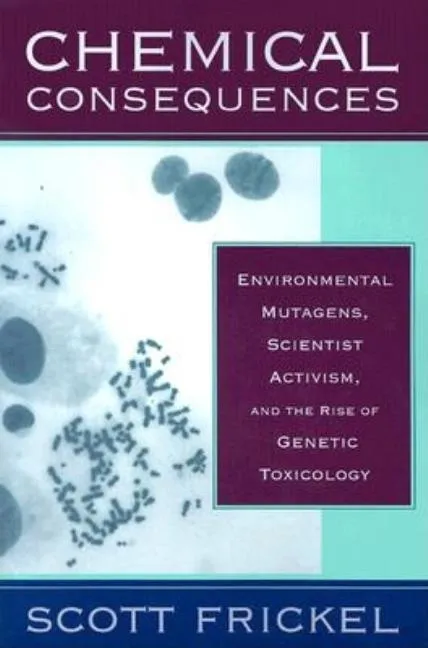
Chemical Consequences
Environmental Mutagens, Scientist Activism, and the Rise of Genetic Toxicology
Report an issue
Tell us what's wrong and we'll take a look.
Thanks – we got it. We'll review and follow up if needed.
Hereis the first historical and sociological account of the formation of an interdisciplinary science known as genetic toxicology, and of the scientists' social movement that created it.
After research geneticists discovered that synthetic chemicals were capable of changing the genetic structure of living organisms, scientists began to explore how these chemicals affected gene structure and function. In the late 1960s, a small group of biologists became concerned that chemical mutagens represented a serious and possibly global environmental threat.
Genetic toxicology is nurtured as much by public culture as by professional practices, reflecting the interplay of genetics research and environmental politics. Drawing on a wealth of resources, Scott Frickel examines the creation of this field through the lens of social movement theory. He reveals how a committed group of scientist-activists transformed chemical mutagens into environmental problems, mobilized existing research networks, recruited scientists and politicians, secured financial resources, and developed new ways of acquiring knowledge. The result is a book that vividly illustrates how science and activism were interwoven to create a discipline that remains a defining feature of environmental health science.
Scott Frickel
Scott Frickel is an associate professor of sociology and environmental studies at Brown University.


Why Readwise Books?
Readwise Books is an ebook & audiobook platform that automatically logs how much you and your friends read, making it fun and easy to read more. Learn more →