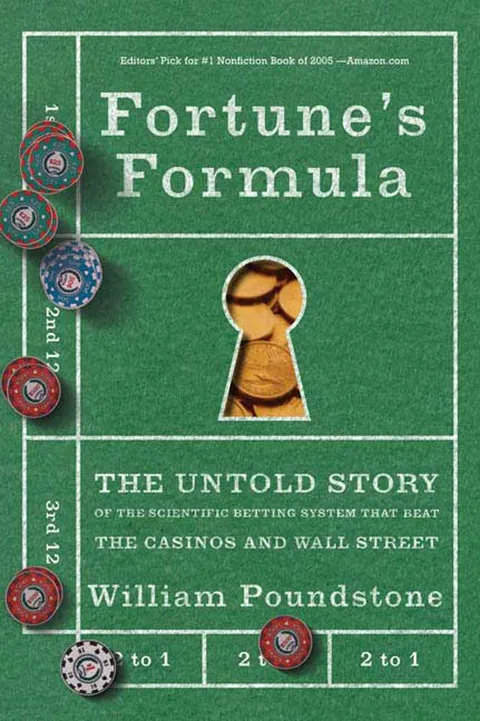
Fortune's Formula
The Untold Story of the Scientific Betting System That Beat the Casinos and Wall Street
Report an issue
Tell us what's wrong and we'll take a look.
Thanks – we got it. We'll review and follow up if needed.
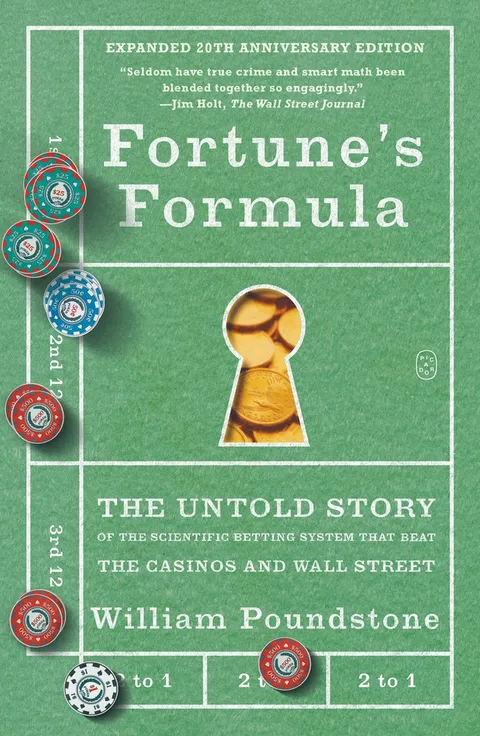
In 1956, two Bell Labs scientists discovered the scientific formula for getting rich. One was mathematician Claude Shannon, neurotic father of our digital age, whose genius is ranked with Einstein's. The other was John L. Kelly Jr., a Texas-born, gun-toting physicist. Together they applied the science of information theory—the basis of computers and the Internet—to the problem of making as much money as possible, as fast as possible.
Shannon and MIT mathematician Edward O. Thorp took the "Kelly formula" to Las Vegas. It worked. They realized that there was even more money to be made in the stock market. Thorp used the Kelly system with his phenomenally successful hedge fund, Princeton-Newport Partners. Shannon became a successful investor, too, topping even Warren Buffett's rate of return. Fortune's Formula traces how the Kelly formula sparked controversy even as it made fortunes at racetracks, casinos, and trading desks. It reveals the dark side of this alluring scheme, which is founded on exploiting an insider's edge.
Shannon believed it was possible for a smart investor to beat the market—and William Poundstone's Fortune's Formula will convince you that he was right.
William Poundstone
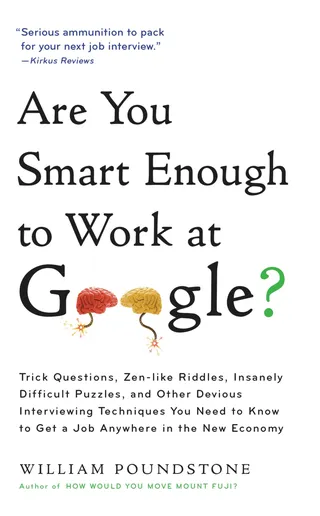
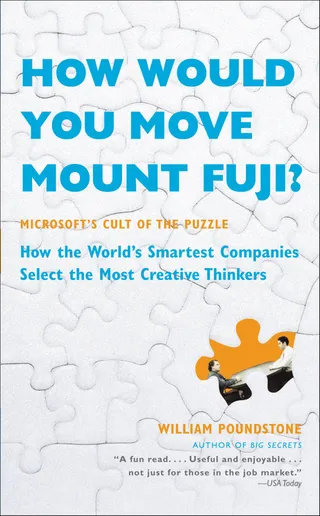
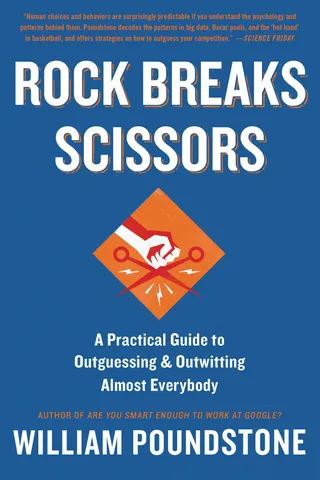
William Poundstone is the author of fourteen books -- including Rock Breaks Scissors, Are You Smart Enough to Work at Google?, How Would You Move Mount Fuji?, and Fortune's Formula, which was Amazon Editor's pick for the number one nonfiction book of the year. He has written for the Believer, the Economist, Encyclopaedia Britannica, Esquire, Harper's, Harvard Business Review, the New York Times op-ed page and Book Review, and Village Voice. Follow Poundstone on Twitter (@WPoundstone) and learn more at his website, home.williampoundstone.net
More by William Poundstone






Why Readwise Books?
Readwise Books is an ebook & audiobook platform that automatically logs how much you and your friends read, making it fun and easy to read more. Learn more →