Report an issue
Tell us what's wrong and we'll take a look.
Thanks – we got it. We'll review and follow up if needed.
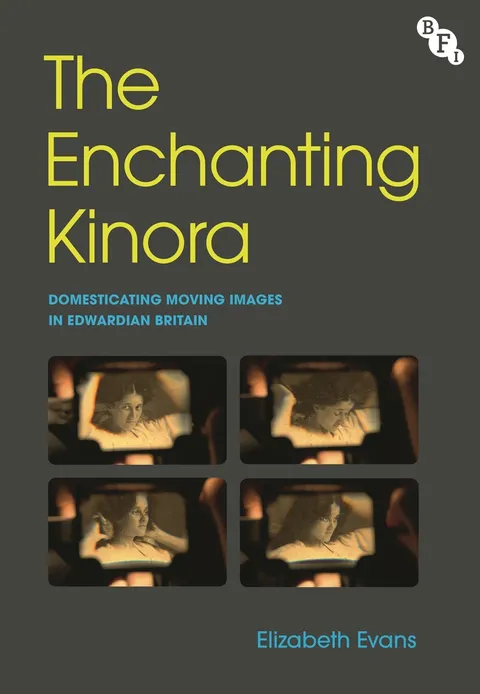
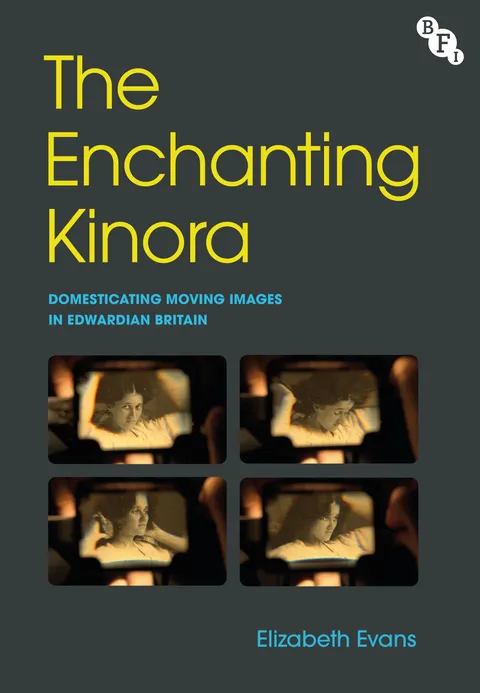
Marketed as more affordable and safer than film cameras, the Kinora system, launched in 1903, was one of the first amateur filmmaking devices and represents one of the earliest attempts to create a domestic market for moving images.
In The Enchanting Kinora, Elizabeth Evans examines the Kinora in its technological, industrial and socio-cultural context to explore how early attempts to domesticate moving images were configured. She closely analyses 84 previously unexamined Kinora reels, filmed using the early motion picture device between 1908-1913 and held by the Smedley Collection. These include 23 reels that were produced for public consumption and others that were meant solely for private viewing by the Smedley family. She goes on to consider the reels as material objects, examining not only their content, but also how the collection was preserved and catalogued by members of the family. Finally, she reflects on her own connection to the reels as the Smedleys' great-granddaughter.
In doing so, Evans expands our understanding of moving images' emergence as part of a wider network of cultural practices in Edwardian Britain that featured within domestic as well as public and professional spaces.
Elizabeth Evans
Elizabeth Evans has received many grants and fellowships for her writing, including an NEA Fellowship, the James Michener Fellowship, and fellowships at Yaddo and MacDowell. She is the author of The Blue Hour and lives in Tucson, Arizona.
More by Elizabeth Evans








Why Readwise Books?
Readwise Books is an ebook & audiobook platform that automatically logs how much you and your friends read, making it fun and easy to read more. Learn more →