Report an issue
Tell us what's wrong and we'll take a look.
Thanks – we got it. We'll review and follow up if needed.
How technology and the politics of attention changed the way we look at art
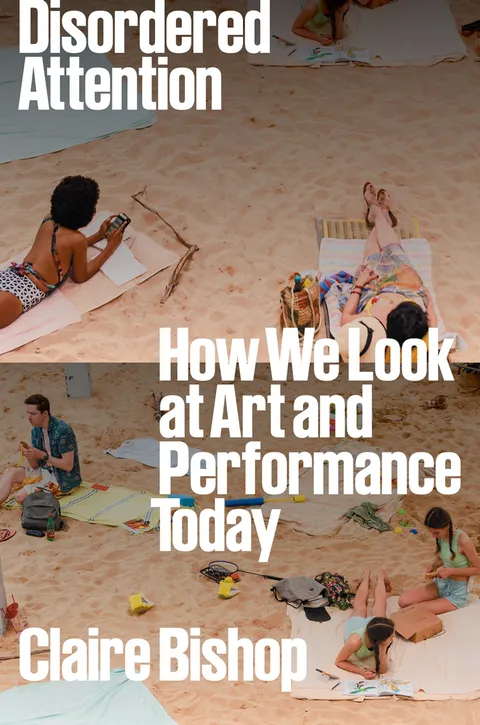
The ways we encounter contemporary art and performance has changed. How are we expectedto engage with today's diverse practice? Is the old model of close-looking still the ideal, or has itgiven way to browsing, skimming, and sampling?
Across four provocative and insightful essays, art historian and critic Claire Bishop identifies trends in contemporary practice. Charting a critical path through the last three decades, Bishop pinpoints how spectatorship and visual literacy are evolving under the pressures of digital technology.
She explores how researched-based exhibitions have proliferated turning the artist into an investigator or archivist with mixed results. Spatial performance can now involve the artist, dancers, or even the audience as participants, often framed with Instagram in mind. The political event is not longer activated without an understanding of the media that will record and distribute it. The proliferation of works that use modernist architecture is noticeable; but has this become a shorthand for something else?
Disordered Attention is a vital survey of 21st century art, from one of the leading art thinkers ofour times.
Claire Bishop
Claire Bishop is Associate Professor in the History of Art department at the CUNY Graduate Center, New York. She is the author of Installation Art: A Critical History; Artificial Hells: Participatory Art and the Politics of Spectatorship; and editor of Participation. in 2008 she co-curated the exhibition "Double Agent" at the ICA. She is a regular contributor to Artforum, October, Tate Etc, IDEA, and other international art magazines.






Why Readwise Books?
Readwise Books is an ebook & audiobook platform that automatically logs how much you and your friends read, making it fun and easy to read more. Learn more →