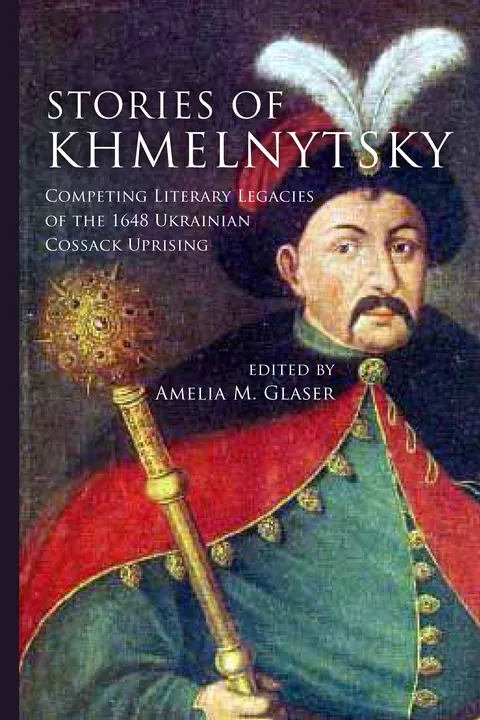
Stories of Khmelnytsky
Competing Literary Legacies of the 1648 Ukrainian Cossack Uprising
Report an issue
Tell us what's wrong and we'll take a look.
Thanks – we got it. We'll review and follow up if needed.
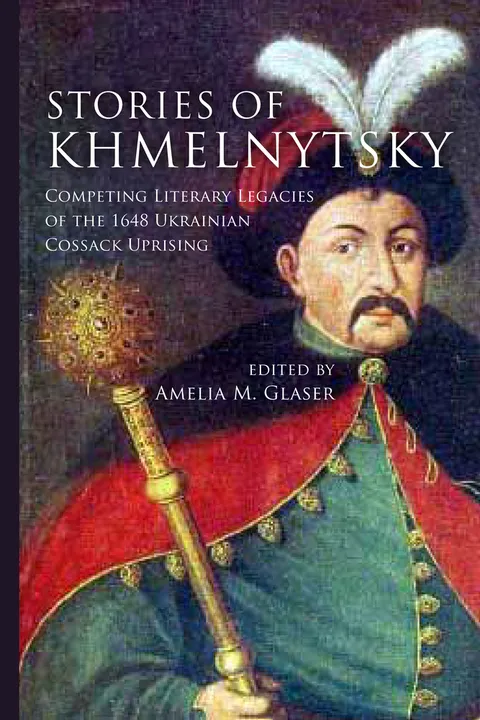
In the middle of the seventeenth century, Bohdan Khmelnytsky was the legendary Cossack general who organized a rebellion that liberated the Eastern Ukraine from Polish rule. Consequently, he has been memorialized in the Ukraine as a God-given nation builder, cut in the model of George Washington. But in this campaign, the massacre of thousands of Jews perceived as Polish intermediaries was the collateral damage, and in order to secure the tentative independence, Khmelnytsky signed a treaty with Moscow, ultimately ceding the territory to the Russian tsar. So, was he a liberator or a villain? This volume examines drastically different narratives, from Ukrainian, Jewish, Russian, and Polish literature, that have sought to animate, deify, and vilify the seventeenth-century Cossack. Khmelnytsky's legacy, either as nation builder or as antagonist, has inhibited inter-ethnic and political rapprochement at key moments throughout history and, as we see in recent conflicts, continues to affect Ukrainian, Jewish, Polish, and Russian national identity.
Amelia M. Glaser
Amelia M. Glaser is Associate Professor of Slavic and Comparative Literature at the University of California, San Diego, and an award-winning translator. She is author of Jews and Ukrainians in Russia's Literary Borderlands and has written for the New York Times, Los Angeles Review of Books, Jewish Quarterly, and Times Literary Supplement. Her translations have been featured on LitHub and on NPR's The World.


Why Readwise Books?
Readwise Books is an ebook & audiobook platform that automatically logs how much you and your friends read, making it fun and easy to read more. Learn more →