Report an issue
Tell us what's wrong and we'll take a look.
Thanks – we got it. We'll review and follow up if needed.
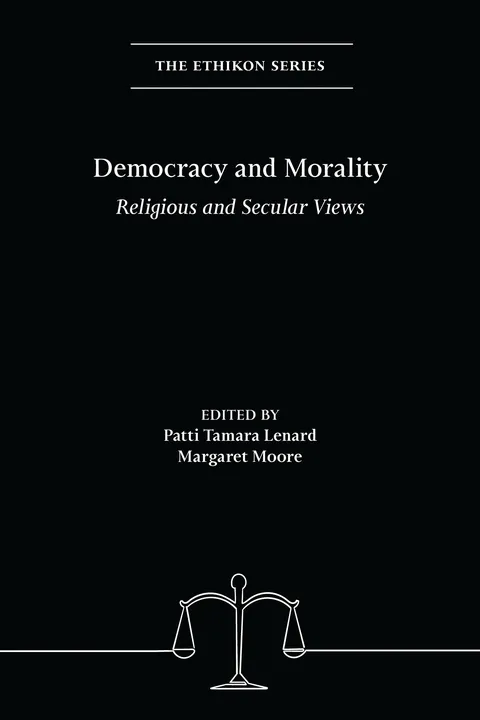
Democracy is a dominant principle and practice to legitimate political power in the modern world, and yet its relationship with other moral traditions is not well understood. some but not all commitments with it (feminism, Classical and Egalitarian variants of Liberalism).
Ethical theories, by their very nature, are universal theories, and tend to be suspicious of democratic legitimacy arguments – since ‘the people’ who are the source of democratic legitimacy might support some things that are contrary to justice, as described in the tradition. Yet, appeal to democracy remains one of the most powerful appeals to legitimize political power in the contemporary world. This volume is interested in the relationship between democracy and moral traditions whose origins either precede the democratic ideal of legitimacy (Buddhism, Christianity, Confucianism, Hinduism, Islam, Judaism, Natural Law) or developed in some sense along side the democratic ideal and share some of its commitments. This volume explores the relationship between these moral traditions and democracy, including the way in which the moral and religious perspectives have adapted in their encounter with democratic ideals, and have themselves modified democratic theory and practice.
This is a work in comparative ethics. The contributors each an expert in one of these traditions, show how that traditions has confronted democracy – and considers different dimensions in which the traditions have engaged with the tradition. To orient the engagement between democratic principles and the moral traditions, the contributors focus on various dimensions in which the two have engaged. The contributors consider their tradition’s views of participation, including eligibility for participation and opportunities to do so, including people with quite different world-views; the scope of democracy, as conceived by the tradition, including how the democratic ‘people’ interact or ought to interact with adherents of other traditions, and whether some of the pillars of moral tradition have themselves helped to inform democratic principles and practices in communities where the ethical tradition is dominant. For example, if there are traditions of consultation and of appropriate authority in a moral tradition, does this operate as a resource for democracy itself, and if so, has it changed the way democracy is practiced in these societies?
What emerges is a rich and nuanced tapestry that testifies to the interaction of moral traditions and democracy, and the various relationships between these traditions and democratic theory and practice.
Margaret Moore
An award-winning author of over sixteen historical romance novels, Margaret began her career at the age of eight when she concocted stories featuring a lovely damsel and a handsome, misunderstood thief. She's had a soft spot for handsome, misunderstood rogues ever since.
Unknowingly pursuing her destiny, Margaret graduated with distinction from the University of Toronto with a Bachelor of Arts degree in English Literature. She also demonstrated a facility for language by winning the Winston Churchill Silver Medal for public speaking. She now utilizes this gift of the gab by giving workshops for various writing groups, including Romance Writers of America and the Canadian Authors Association.
A past president of Toronto Romance Writers, Margaret lives in Toronto with her husband, two teenagers and two cats.


Why Readwise Books?
Readwise Books is an ebook & audiobook platform that automatically logs how much you and your friends read, making it fun and easy to read more. Learn more →